

Chimney Crown Repair: What It Is and Why It Fails
Chimney crown repair explained: what a crown does, why it fails in Chicagoland winters, and when sealing vs. full rebuild is the right answer.
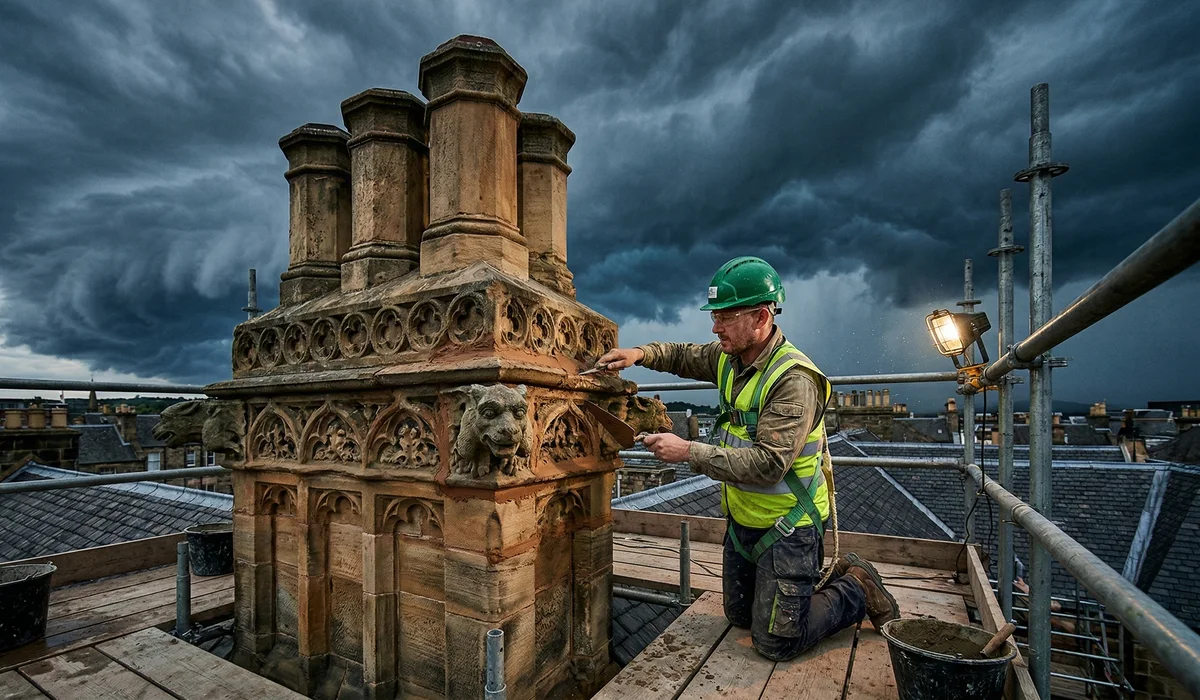
The short version
- Water, failed mortar, cracked crowns, missing caps, and movement are masonry problems that need inspection before repair scope is chosen.
- Repair sequence matters: stop water entry, confirm structural condition, match mortar to the brick, then decide whether sealing, tuckpointing, repair, or rebuild is appropriate.
- Do not use city age, neighborhood age, or generic price ranges as a substitute for roof-level masonry findings.
Source check this article is cross-checked against IRC masonry chimney provisions, NPS repointing guidance, ASTM C270 mortar specification, and GLISA climate resources.
Chimney crown repair is one of the most common jobs on Chicagoland homes, and for good reason. The crown sits at the highest exposed point of the chimney, takes the full force of weather from every direction, and is the first line of defense against water entering the chimney structure. When the crown fails, water follows. A cracked crown is not a cosmetic issue. It is the primary water entry point for most chimney deterioration we see across the North Shore and northwest suburbs.
This post covers what a chimney crown is, why crowns fail at the rate they do in this climate, how to recognize failure signs, and how to determine whether sealing or a full rebuild is the right answer for your chimney.
What a Chimney Crown Is and What It Protects
The chimney crown is the concrete or mortar cap that covers the entire top surface of the chimney masonry, leaving only the flue tile opening exposed. Its function is to direct water away from the chimney structure below. Industry best practice calls for a crown that overhangs the chimney edge with a drip edge and slopes away from the flue so water runs clear of the masonry face rather than down it.
Without the overhang and slope, water pools against the flue tile and runs down the chimney face, entering the masonry through any crack or deteriorated mortar joint. The crown also protects the top courses of brick and the mortar joints at the very top of the chimney, which are the most exposed and typically the first to fail.
Below the crown sits the smoke chamber, the firebox, and the flue liner system. Water that enters through a failed crown reaches all of these components over time. Cracked flue tile, damaged smoke chamber parging, rusted damper hardware, and deteriorated firebox mortar are all downstream consequences of crown failure left unaddressed.
Why Chicagoland Winters Destroy Chimney Crowns
Freeze-thaw cycling is the primary mechanism behind crown failure in this region. Water expands as it freezes. Every crack in the crown that holds water becomes a larger crack after a freeze-thaw event. Over a Chicagoland winter with repeated freeze-thaw cycles in inland Cook County locations, even a hairline shrinkage crack can grow into a structural separation.
The Evanston Community Development Department handles permits for structural chimney work. Crown rebuilds on historic Evanston homes often require salvaging or matching original brick at the chimney top, because the crown sits immediately above the visible masonry courses and any new material needs to be compatible with the original soft brick below.
How to Recognize Crown Failure from the Ground
A full crown inspection requires roof access, but there are visible signs from the ground that indicate inspection is overdue:
Visible cracks: Cracks in the crown surface are sometimes visible from ground level on lower-profile chimneys. On taller chimneys, binoculars help. Look for cracks radiating outward from the flue liner opening, transverse cracks running across the crown surface, and cracks at the crown edge where the material meets the chimney brick.
Missing material: Chunks missing from the crown surface or crown edge indicate the material has progressed from cracking to fracture. Missing crown material leaves the brick and mortar at the chimney top directly exposed to weather.
Efflorescence below the crown: White mineral staining on the chimney face immediately below the crown line indicates water is moving through that section of masonry. Crown failure is the most common cause.
Water stains on the interior wall near the chimney: Staining on the wall or ceiling adjacent to the chimney top can trace to water entering through a failed crown and tracking down through the masonry.
Chimney cap condition: If the chimney cap is rusted, missing, or sitting at an angle, it is worth looking at the crown condition at the same time. Cap failure and crown failure often occur together because they sit at the same elevation and face the same weather exposure.
For a broader view of what inspection covers at the crown and cap level, see our chimney inspection guide for Chicagoland homeowners and the chimney cap replacement guide on what happens when the cap fails separately from the crown.
Sealing vs. Full Crown Rebuild: How to Decide
Not every crown problem requires a full rebuild. The decision depends on the type and extent of the failure:
Surface sealing is appropriate for minor hairline cracks without structural separation, crowns with intact geometry that slope correctly and have proper overhangs, and crowns where the base material is sound. A flexible sealant or elastomeric coating applied to clean, dry crown surface can extend crown life when the underlying structure is intact.
Partial repair is appropriate for crowns where isolated sections have failed but the majority of the surface is structurally sound. A professional assessment identifies which sections can be patched versus which need full replacement.
Full crown rebuild is required when cracks cross the crown with visible separation, when the crown has broken into multiple pieces, when the original crown had an incorrect slope or no overhang and continues to direct water toward the masonry, or when the base material has deteriorated to the point where patching has no stable substrate to bond to.
The signs your chimney needs repair post covers the ground-level indicators that apply beyond just the crown.
How Crown Failure Damages the Rest of the Chimney
Crown failure is a leading cause of cascading chimney damage. Here is the sequence:
- Crown cracks allow water to enter the chimney top
- Water reaches the mortar joints at the top chimney courses and accelerates their deterioration
- Freeze-thaw cycling at the mortar joints causes spalling of the adjacent brick faces
- Water tracks down the flue liner, potentially cracking or separating clay flue tiles
- Water reaches the smoke chamber and damages the parging
- Damper and firebox components corrode and fail
See also: chimney inspection before buying a home in Illinois if you are in a real estate transaction and need to understand what a crown inspection reveals.
What Proper Crown Repair Looks Like
A proper crown rebuild begins with removing the failed material down to sound masonry or substrate. The new crown is formed to overhang the chimney edge and slope away from the flue. The flue tile is isolated from the crown material to allow for independent thermal expansion, which prevents the crown from cracking at the tile joint due to heating and cooling cycles.
On historic chimneys, the repair approach depends on the original mortar and brick specification. For pre-1920 masonry with soft brick and original lime-rich mortar, the crown repair material needs to be compatible in hardness with the masonry below. Using a crown material that is harder than the underlying brick concentrates stress at the crown-to-brick joint and produces the same type of failure. The NPS Brief 2 guidance on repointing historic masonry applies here.
For Des Plaines homes along the older streets near the Northwest Highway corridor, where some of the oldest chimneys in our service area exist with 1870s-era brick, the crown rebuild approach is one of the more technically demanding repairs we do in this service area. The Des Plaines Community and Economic Development Department requires permits for structural chimney work.
Schedule Your Crown Inspection and Repair Estimate
Crown repairs completed in September and October cure properly in fall temperatures and protect the chimney through the full winter freeze-thaw season. December repairs often occur in conditions that compromise mortar quality and cure time.
Delta - Chimney Repair and Services has handled chimney crown repair across the North Shore and northwest suburbs since 1987. We serve Des Plaines, Evanston, Skokie, Niles, and the surrounding communities.
Call (847) 685-1043 or visit our contact page to schedule your inspection and written estimate. We document the condition of the crown and the masonry below before recommending a repair scope.
A cracked crown is not a cosmetic issue. It is the primary water entry point for most chimney deterioration we see on Chicagoland homes.
Sources and Standards
- NFPA 211: Standard for Chimneys, Fireplaces, Vents, and Solid Fuel-Burning Appliances National Fire Protection Association Defines the three chimney inspection levels and the annual inspection standard.
- ASTM C270: Standard Specification for Mortar for Unit Masonry ASTM International Mortar types and minimum compressive strengths used in chimney masonry repair.
- Great Lakes Freeze-Thaw Climate Data GLISA, University of Michigan Freeze-thaw cycle data for the Great Lakes region.
- International Residential Code, Chapter 10: Chimneys and Fireplaces International Code Council Residential code for chimney and fireplace construction and clearances.
- Preservation Brief 2: Repointing Mortar Joints in Historic Masonry Buildings U.S. National Park Service Guidance on matching mortar for historic and soft-brick chimney repair.
- International Residential Code, Section R1003: Masonry Chimneys International Code Council Code provisions specific to masonry chimney construction.
Fact-checked against the above sources on 2026-05-21.
Pre-Heating-Season Inspection and Sweep (Aug-Oct)
Chimney work runs on a calendar. This is what matters for a Chicagoland home in the window you are reading this.
- The Annual Chimney Inspection: What It Covers NFPA 211's annual cadence means the inspection belongs before the first fire of the season, not after.
- Why Fall Is the Best Time to Schedule a Chimney Sweep Answers the exact timing question homeowners are searching right now, before appliances go back into daily use.
- Fall Chimney Checklist: Before You Light the First Fire A complete pre-season checklist for everything to confirm before heating season starts.
- Chicagoland Seasonal Chimney Inspection Timing: When to Book Chicagoland-specific timing guidance for when to book, tied to local weather patterns.
- Heating Season Chimney Safety for Chicagoland Confirms the flue is clear and the liner is sound before regular winter use begins.
- Holiday Fireplace Safety: Before You Light the Fire What to check before lighting the fire for holiday gatherings, when the fireplace sees its heaviest seasonal use.
- Carbon Monoxide and Your Chimney Carbon monoxide risk rises with active heating-season use; this covers how a chimney problem creates that risk.
- Chimney Fire: Warning Signs and Prevention Creosote accumulated over active winter use is the direct driver of chimney fire risk.
- Freeze-Thaw Damage: What January Does to Your Chimney Where winter's freeze-thaw cycling shows up as visible masonry damage each spring.
- Post-Winter Chimney Checklist for Chicagoland A structured checklist for what to look at once the freeze-thaw season has passed.
- Spring Chimney Inspection: Reading Winter's Damage The seasonal inspection built specifically around catching winter's damage before it worsens.
- Cracked Chimney Crown: Causes and Repair The crown takes the most direct freeze-thaw damage of any component; what a crack there actually means.
- Why Spring Is the Right Time to Rebuild a Chimney Mortar needs consistently warm temperatures to cure properly, which is why spring opens the rebuild season.
- Summer Is the Best Time for Major Chimney Work The case for why summer, not winter, is when masonry work should actually be scheduled.
- Chimney Masonry Repair: Brick, Mortar, and Crown The comprehensive masonry repair guide for the season when that work can actually be done correctly.
- Tuckpointing a Chimney: When Mortar Joints Fail Tuckpointing mortar needs the same curing conditions as a full rebuild, which is why it's a warm-season job too.
Crown and cap fail together more often than either fails alone; this is the cap-specific companion (cross-silo).
Chimney Crown Repair FAQs
01 What is a chimney crown and what does it do?
02 What causes chimney crowns to crack?
03 Can a cracked chimney crown be sealed instead of replaced?
04 How long does chimney crown repair take?
05 Does chimney crown repair require a permit in Cook County?
Have a Question About Your Chimney?
Documented condition, a plain explanation, and a recommended scope before any work.