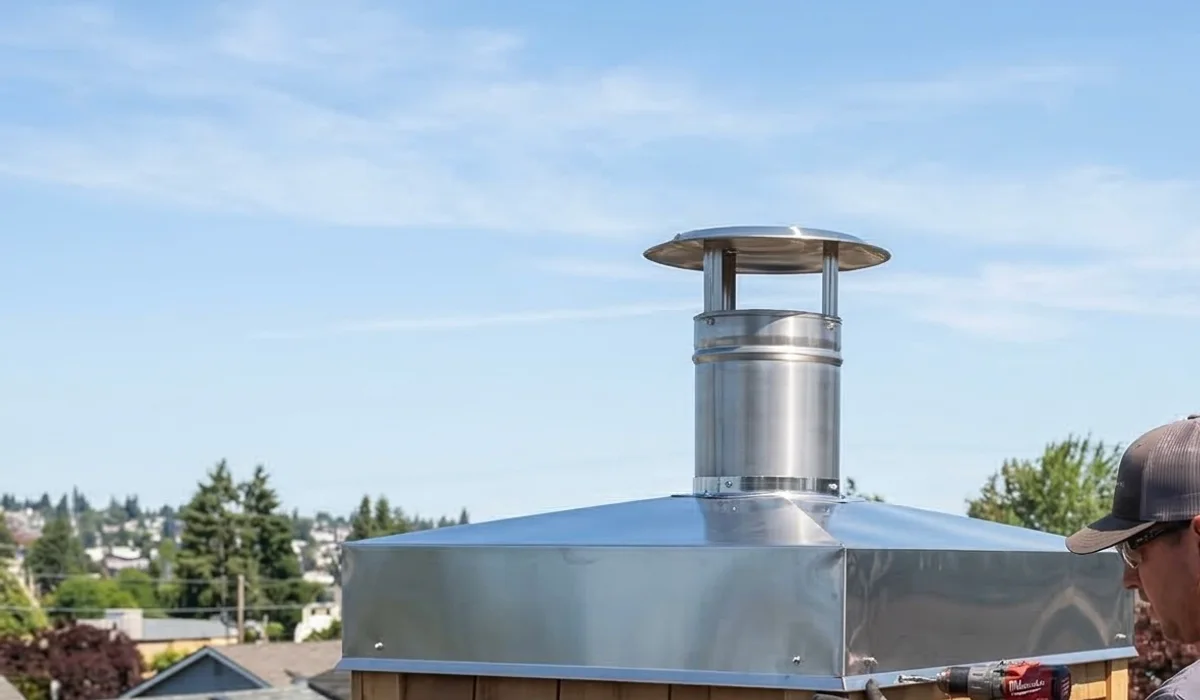
Factory-built fireplaces often run through a framed chase instead of a full masonry chimney. The chase cover is the metal top that protects that chase. When it rusts, flattens, opens at seams, or loses slope, water can enter the structure around the flue.
Signs Your Chase Cover Needs Replacement
- Rust staining on the chase, siding, or chimney face
- Water pooling on the metal cover
- Loose storm collar or gaps around the flue pipe
- Noise, movement, or lifting during wind
- Brown water stains near the fireplace or chase
- Prior sealant repairs that have separated
If staining also appears lower on the exterior, chimney flashing repair may be a separate water entry point that should be addressed at the same time.
What a Replacement Should Address
- Correct measurements and fit
- Positive slope to move water off the cover
- Drip edge to keep water off the chase walls
- Proper flue collar and cap relationship
- Material choice suited to exposure and budget
A chimney inspection before replacement confirms whether standing water has reached the chase interior and what additional repairs may be needed.