Call Now Request Quote

Chicagoland chimney and fireplace service

Chimney Sweep and Cleaning Service

Creosote levels, blockages, and visible flue conditions documented during sweep work. NFPA 211 inspection language applied to findings.

Creosote Primary Buildup
Draft Path Flow Review
Written Notes Service Record
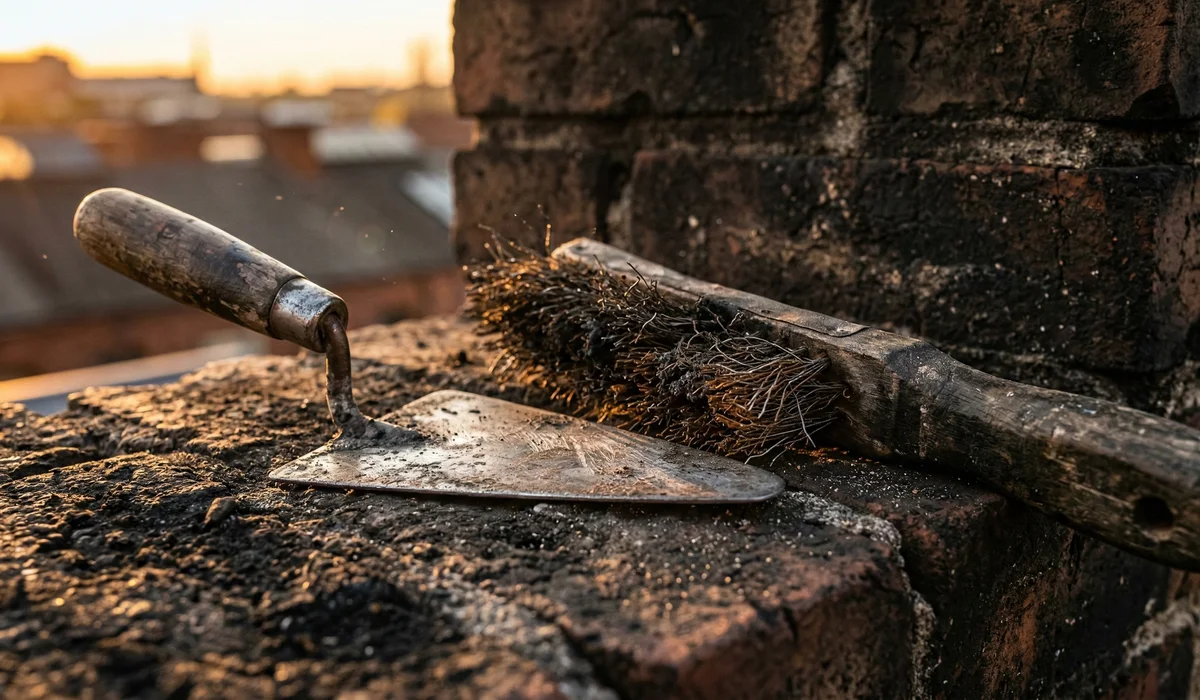
Chimney sweeping tools beside a masonry chimney

Short Answer

A chimney sweep removes buildup and flags what needs a closer look

A chimney sweep should remove soot, ash, and accessible creosote while also noting signs of moisture, draft problems, damage, or blockage that can affect fireplace performance.

A professional chimney sweep removes soot, ash, and creosote from the fireplace and flue path. A thorough chimney cleaning is also a practical time to notice draft restrictions, moisture signs, damaged components, or conditions that should be inspected before the system is used again.

When You Need a Chimney Sweep

  • Soot or creosote buildup is visible in the firebox or flue
  • Fireplace odor gets stronger during humid weather
  • Smoke does not draft normally
  • Ash or debris is accumulating around the damper
  • Animals, leaves, or nesting material may be present
  • The fireplace has not been serviced before seasonal use

What the Visit Reviews

  • Firebox and damper condition
  • Smoke shelf and smoke chamber access points
  • Accessible flue path and buildup level
  • Cap or screen blockage where visible
  • Moisture, staining, or debris indicators

Cleaning Does Not Replace Repair

If the cleaning visit shows damaged masonry, cracked flue tiles, a failing damper, or active moisture, that issue should be documented separately. Cleaning can make a fireplace cleaner, but it does not correct structural or water-entry problems.

Creosote
Primary Buildup
Draft Path
Flow Review
Written Notes
Service Record

Estimate Logic

What Changes a Cleaning Estimate

Cleaning scope changes when there is heavy buildup, difficult access, a blockage, odors, moisture, or signs that the chimney needs inspection before normal use.

  • Fireplace type, flue access, and system condition
  • Amount and type of soot or creosote buildup
  • Bird nests, debris, or visible blockage concerns
  • Whether inspection or repair findings need separate documentation

What We Put in Writing for Chimney Sweep & Cleaning

Scope

Clear explanation of the issue, the proposed repair, and the access needed before work begins.

Materials

Named materials and standards where they matter, including NFPA 211 inspection scope and ASTM C270 mortar matching.

Documentation

Estimate notes, approved scope, and maintenance guidance for the chimney or fireplace system.

Chimney Sweep & Cleaning Questions

How often should a chimney be cleaned?

Cleaning frequency depends on use, fuel, draft, moisture, and buildup. An inspection or service visit should determine whether cleaning is needed before continued use.

Is chimney cleaning the same as chimney inspection?

No. Cleaning removes buildup. Inspection evaluates condition and risk. A cleaning visit can reveal issues, but a formal inspection has a different purpose and scope.

Can odors mean the chimney needs cleaning?

Odor can come from creosote, moisture, animals, air pressure, or other conditions. Cleaning may help, but the source should be reviewed.

Need a Chimney Sweep?

Request a chimney sweep with a condition review before the next burn season.

Request Estimate Call (847) 685-1043