Chimney inspections are about deciding what is actually happening inside and around the system before money is spent on repairs. The inspection level should match the reason for the visit and the risk being evaluated.
Inspection Levels
- Level I for routine review of readily accessible areas under continued normal use
- Level II when a home is being sold, a system changes, damage is suspected, or more documentation is needed
- Level III when concealed areas may need to be opened to evaluate a suspected hazard
What We Check
- Firebox, damper, smoke chamber, and accessible flue conditions
- Chimney crown, cap, chase cover, and top-side water protection
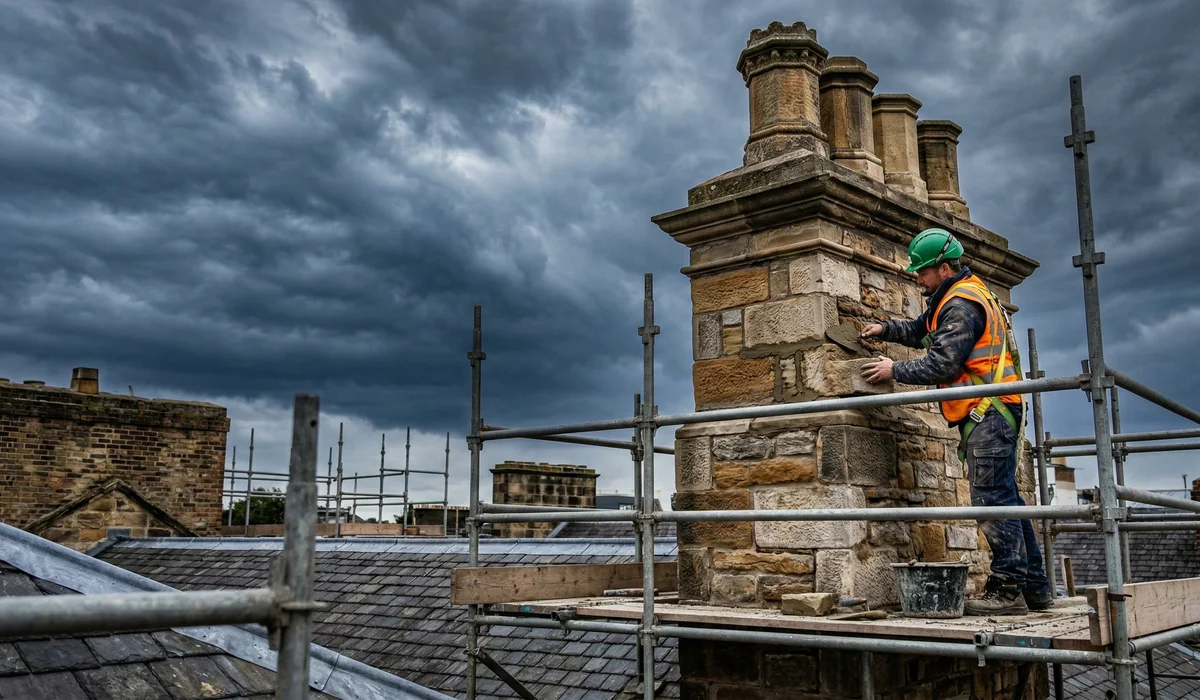
- Exterior masonry, mortar joints, flashing, and roof-chimney transitions
- Signs of moisture, blockage, staining, movement, or prior fire event
- Whether cleaning, repair, replacement, or monitoring is the better next step
Why Inspection Comes First
Without inspection, chimney recommendations can become guesswork. A leak may be flashing, crown, cap, or masonry. Smoke problems may be draft, damper, blockage, or smoke chamber geometry. Inspection narrows the decision.