

The Annual Chimney Inspection: What It Covers
An annual chimney inspection per NFPA 211 checks every component from the firebox to the cap. Learn what each inspection level covers and when it applies.
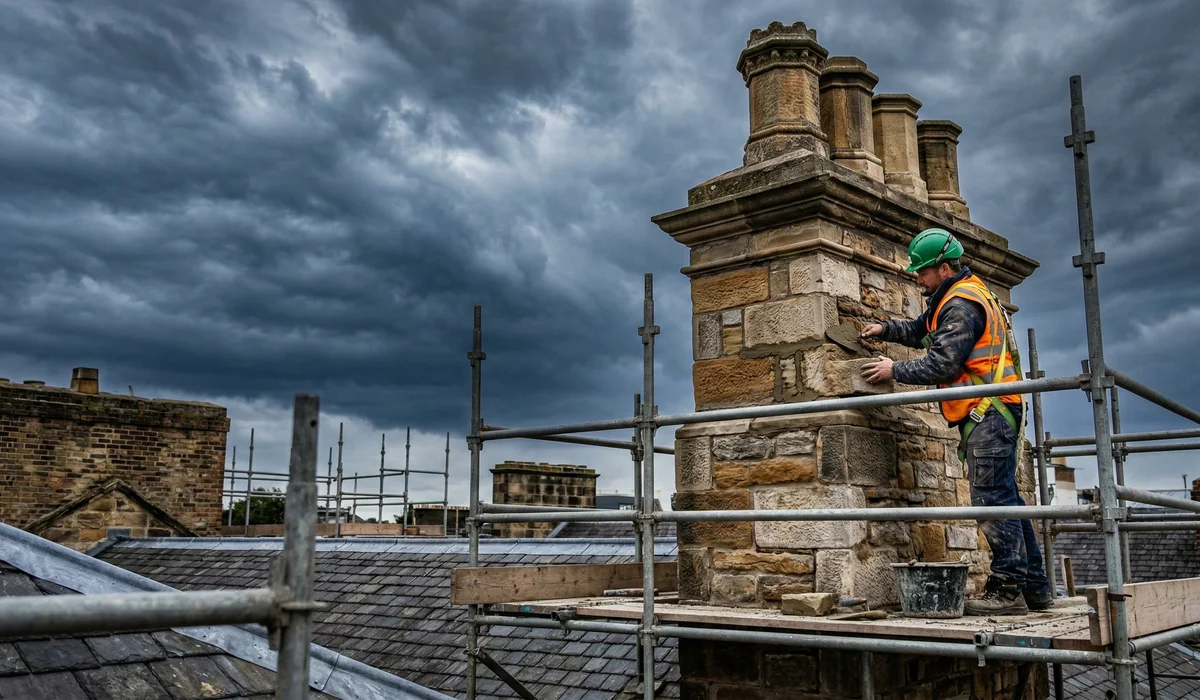
The short version
- Schedule an annual chimney inspection before heating season, especially if the fireplace, furnace flue, or gas appliance is active.
- Level 1 is the routine accessible inspection. Level 2 is the right baseline after a property sale, appliance change, chimney fire, major weather event, or suspected hidden flue problem.
- Use the inspection report to decide whether the next step is cleaning, cap or crown repair, liner evaluation, or no repair at all.
Source check inspection scope is cross-checked against CSIA Level 1 fireplace inspection guidance, CSIA Level 2 inspection guidance, and EPA wood-burning maintenance guidance.
An annual chimney inspection is the single most reliable way to confirm that a fireplace or chimney system is safe to use for the coming heating season. NFPA 211 is the industry standard commonly used for annual inspection planning on chimneys in active service. That standard exists because chimneys deteriorate from weather, thermal cycling, and use in ways that are not visible from the firebox or from ground level, and that are not caught by any other routine maintenance.
This post covers what the annual chimney inspection examines at each component level, how NFPA 211’s three inspection levels differ and when each applies, and what specific issues the inspection commonly finds in the northwest suburban and DuPage County housing stock.
What the Annual Inspection Covers
A chimney is not a single component. It is a system of interconnected parts that each have specific functions and specific failure modes. The annual inspection checks every part of that system.
Firebox: The inspection begins at the firebox floor and works upward. The firebox walls, floor, and back are examined for cracks in the refractory panels or masonry, spalling brick, and deteriorated mortar joints. A firebox crack that extends through to the outer masonry is a structural and safety concern. Cracks limited to the surface refractory material are generally maintenance items.
Damper: The throat damper is checked for full travel from closed to open, freedom from corrosion and warping that prevents complete opening, and tight seal when closed. A damper that does not open fully restricts draft. One that does not seal tightly when closed allows heat loss and, more importantly, allows conditioned air to escape up the flue year-round.
Smoke shelf and smoke chamber: The smoke shelf, located behind and above the throat damper, is checked for accumulated debris, standing water marks, and soot accumulation from backdrafting. The smoke chamber walls above the shelf are examined for deteriorated parge coating, cracks, and incorrectly corbeled or rough masonry that disrupts airflow.
Flue interior: In a Level I inspection, the visible portion of the flue is checked from below with a flashlight. In a Level II inspection, a video camera scans the full length of the flue interior, revealing cracks in the clay flue tiles, displaced tiles, mortar joint failures, and obstructions anywhere along the flue path.
Crown: The chimney crown is the concrete or mortar cap that covers the top of the masonry, surrounding the flue tile opening. It is examined for cracks, spalling, and separation from the chimney masonry. A cracked crown allows water to enter the chimney structure with every rain, and water that enters the masonry accelerates freeze-thaw damage to the mortar joints below.
Cap: The cap that covers the flue tile opening is checked for proper fit, intact mesh, secure mounting, and absence of corrosion. A cap with failed mesh is functionally uncapped for animals and debris.
Exterior masonry: The visible exterior masonry from the roofline to the top is examined for spalling brick, deteriorated mortar joints, cracks, efflorescence, and evidence of water entry. The flashing at the chimney-roof junction is examined for proper integration and sealant condition.
NFPA 211 Inspection Levels
NFPA 211 defines three inspection levels with specific trigger conditions for each.
Level I: Visual inspection of all readily accessible portions. Appropriate for a chimney in continued service under unchanged conditions, meaning the same appliance is connected, the same fuel type is used, and no significant events have occurred since the previous inspection. This is the standard annual inspection for a chimney that passes the previous year and has had no changes.
Level II: Adds video scanning of the flue interior plus inspection of accessible attics, crawl spaces, and basements where the chimney passes through. Required in four specific situations: property sale or transfer, change of fuel type or connected appliance, after a chimney fire, or when a Level I finding suggests further examination is warranted. Level II is also the appropriate starting point for any chimney that has not been inspected in multiple years or has unknown history.
Level III: Involves examining concealed areas and may require removing building or chimney components. This level is reserved for suspected serious hazards that cannot be fully assessed through Levels I or II. It is rare in residential applications and is typically triggered by a Level II finding of suspected major structural damage.
The distinction matters practically for homes in the northwest suburbs. When a Hanover Park or Streamwood homeowner is selling a home and the buyer requests a chimney inspection, that inspection is by definition a Level II because a property transfer is a NFPA 211 trigger. A Level I in that context would not satisfy the standard.
The level I vs level II chimney inspection post covers the distinction in more depth, including what video scanning reveals that a visual inspection misses.
Why the Annual Cadence Matters
The northwest suburban and DuPage County housing stock centers on planned postwar and late-20th-century construction, with some earlier prewar village-core homes in Lombard, Addison, and Roselle. The annual inspection catches problems at the stage where repair is simpler and less expensive. A crown with a hairline crack can be sealed in a maintenance visit. A crown with years of unaddressed freeze-thaw progression may require full replacement. A single failed mortar joint can be repointed. Ten failed mortar joints across the upper chimney require a tuckpointing project.
In the Chicagoland climate with repeated freeze-thaw cycles each winter, a crack that does not exist in October can be measurably larger by March. Water expands as it freezes, and that expansion force, applied to a crack that is wet from fall rains, can advance that crack meaningfully over a single winter.
The inspection also catches functional changes that are not visible from outside the house. A chimney in which the clay tile liner has shifted or cracked is not safe to use, but nothing visible from the firebox floor confirms this without video scanning. A flue that looked fine from below last season may have a displaced tile section after a season of freeze-thaw movement.
The chimney inspection cost Chicago post covers the cost range for the Chicagoland market. The carbon monoxide chimney post explains what a deteriorated liner means for carbon monoxide risk, which is the direct safety consequence of skipping inspection on a system that has developed liner damage.
Connecting Inspection to Service Timing
The annual inspection connects directly to service timing decisions. The inspection result tells you whether the chimney needs immediate repair before use, scheduled maintenance before the next season, or only the cleaning that was concurrent with the inspection.
An immediate repair finding means the system should not be used until the identified problem is addressed. A chimney with a cracked liner, a disconnected cap, or an active flue obstruction is not safe to use regardless of how the fireplace looks from the firebox floor.
A scheduled maintenance finding means the chimney can be used this season but has components that should be addressed before winter damage advances further. Crown cracks in the early stage, a cap with beginning corrosion, or mortar joints that are sound but showing weathering all fall into this category.
The winter chimney repair timing guide covers the timing logic for repair scheduling in relation to inspection findings. The chimney repair scheduling guide covers the broader annual service planning process.
Scheduling Your Annual Inspection
Delta - Chimney Repair and Services has handled chimney inspection across the northwest suburbs and DuPage County since 1987. We serve Addison, Lombard, Hanover Park, and Streamwood, along with the broader Chicagoland area.
We perform Level I and Level II inspections and provide a written report of findings with a separate estimate for any recommended work. The inspection and repair are separate transactions with separate estimates. Call (847) 685-1043 or use our contact form to schedule your inspection.
The inspection is not just about finding problems. It is about confirming the system is safe to use for another season before you rely on it.
Sources and Standards
- NFPA 211: Standard for Chimneys, Fireplaces, Vents, and Solid Fuel-Burning Appliances National Fire Protection Association Defines the three chimney inspection levels and the annual inspection standard.
- Chimney Safety Institute of America: Inspection and Sweep Standards Chimney Safety Institute of America Industry standards for chimney inspection and the value of certified technicians.
- International Residential Code, Chapter 10: Chimneys and Fireplaces International Code Council Residential code for chimney and fireplace construction and clearances.
- CSIA Standard Operating Procedure: Level 1 Inspection of a Masonry Fireplace Chimney Safety Institute of America CSIA field procedure for routine Level 1 chimney and masonry fireplace inspection scope.
- CSIA Standard Operating Procedure: Level 2 Inspection of a Factory-Built Fireplace Chimney Safety Institute of America CSIA field procedure for changed-use, sale, relining, fire, weather, or malfunction Level 2 inspection scope.
- Carbon Monoxide Poisoning Basics Centers for Disease Control and Prevention Public health guidance on CO risks, symptoms, detectors, and prevention.
- Home Heating Equipment and Carbon Monoxide Safety U.S. Consumer Product Safety Commission Consumer safety guidance on yearly inspection of fuel-burning heating systems, chimneys, flues, and vents.
Fact-checked against the above sources on 2026-05-21.
Pre-Heating-Season Inspection and Sweep (Aug-Oct)
Chimney work runs on a calendar. This is what matters for a Chicagoland home in the window you are reading this.
- Why Fall Is the Best Time to Schedule a Chimney Sweep Answers the exact timing question homeowners are searching right now, before appliances go back into daily use.
- Fall Chimney Checklist: Before You Light the First Fire A complete pre-season checklist for everything to confirm before heating season starts.
- Chicagoland Seasonal Chimney Inspection Timing: When to Book Chicagoland-specific timing guidance for when to book, tied to local weather patterns.
- Last Call: Chimney Repair Before the Freeze Repair slots fill before the heating-season rush; the case for booking now instead of waiting.
- Heating Season Chimney Safety for Chicagoland Confirms the flue is clear and the liner is sound before regular winter use begins.
- Holiday Fireplace Safety: Before You Light the Fire What to check before lighting the fire for holiday gatherings, when the fireplace sees its heaviest seasonal use.
- Carbon Monoxide and Your Chimney Carbon monoxide risk rises with active heating-season use; this covers how a chimney problem creates that risk.
- Chimney Fire: Warning Signs and Prevention Creosote accumulated over active winter use is the direct driver of chimney fire risk.
- Freeze-Thaw Damage: What January Does to Your Chimney Where winter's freeze-thaw cycling shows up as visible masonry damage each spring.
- Post-Winter Chimney Checklist for Chicagoland A structured checklist for what to look at once the freeze-thaw season has passed.
- Spring Chimney Inspection: Reading Winter's Damage The seasonal inspection built specifically around catching winter's damage before it worsens.
- Cracked Chimney Crown: Causes and Repair The crown takes the most direct freeze-thaw damage of any component; what a crack there actually means.
- Why Spring Is the Right Time to Rebuild a Chimney Mortar needs consistently warm temperatures to cure properly, which is why spring opens the rebuild season.
- Summer Is the Best Time for Major Chimney Work The case for why summer, not winter, is when masonry work should actually be scheduled.
- Chimney Masonry Repair: Brick, Mortar, and Crown The comprehensive masonry repair guide for the season when that work can actually be done correctly.
- Tuckpointing a Chimney: When Mortar Joints Fail Tuckpointing mortar needs the same curing conditions as a full rebuild, which is why it's a warm-season job too.
The inspection content answers what's wrong; this answers what it costs to have someone look.
Chimney Inspection FAQs
01 How often should a chimney be inspected?
02 What is the difference between a Level I and Level II chimney inspection?
03 Do I need an inspection even if I never used the fireplace last year?
04 What does a chimney inspection cost?
05 What happens if the inspection finds a problem?
06 Can an inspection be done in winter?
More Chimney Inspection Guides
Your Chimney Failed Inspection. What Happens Next?
A failed chimney inspection is a scope question, not a verdict. How to read the finding, what has to be fixed before you burn, and what can reasonably wait until spring.
Read article InspectionHow to Read a Chimney Inspection Report
What the levels, components, and terminology on a chimney inspection report actually mean, and the questions worth asking before you approve any work.
Read article Chimney InspectionOrphaned Water Heater: What a High-Efficiency Furnace Does to Your Chimney
When a high-efficiency furnace switches to PVC sidewall venting, the gas water heater is left alone on a flue sized for two appliances. Here is why that matters and what to do about it.
Read article Fireplace ServicesWood Stoves and Fireplace Inserts: What Your Chimney Has to Do
What a wood stove or insert needs from an existing masonry chimney: liner sizing set by the appliance, clearances, the block-off plate, and why a stub connector is not enough.
Read articleHave a Question About Your Chimney?
Documented condition, a plain explanation, and a recommended scope before any work.