

Chimney Damper Problems: Stuck, Broken, or Missing
Chimney damper repair covers stuck plates, broken mechanisms, and missing dampers - each causing smoke, heat loss, or draft failure.
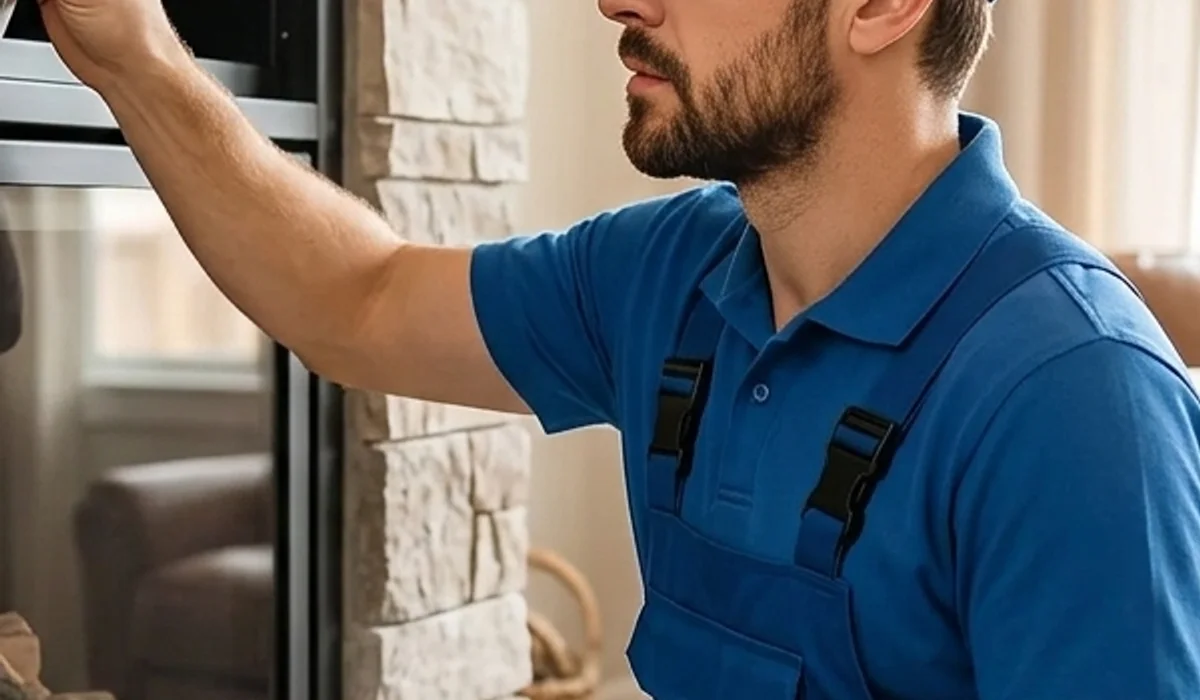
The short version
- A damper stuck closed will cause immediate smoke rollback when a fire is lit; always confirm the plate is in the open position before lighting.
- A throat damper that does not seal completely when closed is normal by design -- a fully airtight throat seal creates a CO risk if a fire is accidentally lit with the damper still closed.
- A missing or failed throat damper is typically replaced with a top-mount damper cap, which seals at the chimney crown and addresses draft, moisture entry, and animal access in one unit.
Source check this article is cross-checked against CSIA inspection guidance, CDC carbon monoxide guidance, CPSC home heating safety guidance, and EPA wood-burning maintenance guidance.
A chimney damper controls whether the flue is open or closed. It is the metal plate, usually cast iron, that sits in the throat of the fireplace just above the firebox opening. When it works correctly it is invisible in daily use. When it fails, it produces smoke in the house, constant cold drafts, or a firebox you cannot safely light. Chimney damper repair is one of the more common fireplace service calls on older Chicagoland homes, and the right fix depends on what type of failure you have.
A properly functioning damper should open fully to allow smoke and combustion gases to rise up the flue during a fire, and close firmly enough when the fireplace is not in use to prevent conditioned air from escaping and cold air or moisture from entering. When either function fails, the problem is felt immediately.
How a Throat Damper Works
The throat damper sits at the narrowing point above the firebox opening, at the base of the flue. It is typically a cast iron or steel plate mounted on a pivot or hinged frame. A handle or lever inside the firebox, usually a rotating rod or a push-pull bar, opens and closes the plate.
The smoke shelf sits just behind the damper plate. Its purpose is to catch debris and rain falling down the flue, and to deflect downdrafts so they do not push smoke into the house. The damper plate pivots above the smoke shelf.
Diagnosing Stuck or Seized Dampers
The most obvious symptom is a damper that will not move. Smoke immediately backs into the room when a fire is lit because the plate is blocking the flue opening. The plate is stuck and will not pivot.
Before diagnosing the mechanism, visually confirm which way the damper is stuck. A damper stuck fully closed blocks combustion entirely and forces smoke into the house. A damper stuck partially open still allows smoke to exit but creates constant heat loss and air infiltration when the fireplace is not in use. A damper stuck fully open wastes conditioned air continuously.
The causes in Chicagoland’s climate fall into three main categories:
Rust and corrosion: This is the most common failure on older North Shore homes. Cast iron throat plates are exposed to moisture from rain, condensation, and flue gases throughout their service life. Over decades the pivot hardware corrodes to the point where the plate will not move at all, and replacement rather than repair becomes the only practical option.
Creosote buildup: Heavy creosote deposits around the damper frame can physically bond the plate in place. Stage 2 and Stage 3 creosote is tar-like and adhesive when warm, then hardens when cold, and it can glue a damper in whatever position it was left. A chimney sweep that addresses creosote buildup often frees a damper that appeared completely seized.
Physical damage: A chimney fire, debris fall, or prior repair work can physically deform or displace the damper frame. A warped or out-of-square frame will not pivot correctly even if the mechanism is otherwise functional.
Diagnosing Dampers That Do Not Seal
A different problem is a damper that moves freely but does not seal when closed. Cold air enters even when the handle is in the closed position. You can feel a draft at the firebox face with the damper closed.
This is mostly normal for throat dampers by design. They leave air gaps by intent because a completely airtight throat seal creates a carbon monoxide risk if someone lights a fire without opening the damper first. The damper is not supposed to be a complete seal.
Top-Mount Dampers as a Replacement Option
A top-mount damper installs at the chimney crown, sealing the flue at the top rather than at the throat. It is connected to a cable that runs down the flue and clips to a bracket inside the firebox. Pulling the cable handle opens the damper before lighting a fire; releasing it allows the damper to close.
The advantages over a throat damper:
- Seals at the top of the flue, which prevents rain, snow, and animal entry as well as controlling air movement
- Does not require the homeowner to reach into the firebox to operate it
- The gasket seal on a top-mount damper is typically more complete than a worn throat plate
- Eliminates the need to replace the entire throat assembly, which is a more invasive repair on older fireplaces
When the Damper Is Missing
A fireplace with no damper at all is a direct opening between the living space and the outdoors. Conditioned air exits up the flue continuously, outdoor air, animal entry, and moisture enter continuously, and any fire you light sends smoke directly up without the draft control the damper provides.
Missing dampers are not uncommon on older fireplaces that received repairs over the decades. A previous owner may have removed a damaged damper and never replaced it. The standard repair is installing a top-mount damper cap, which provides both the damper function and the cap function in one unit.
The chimney draft problems post covers the broader range of draft failures, and a missing damper is often part of what drives smoke-back problems during ignition.
How Damper Condition Connects to Annual Inspection
NFPA 211 calls for at least one annual inspection for any chimney in service, and the damper condition is one of the components evaluated in a Level I inspection. The inspection confirms whether the plate moves freely, whether the seal gap is within normal range, and whether corrosion has progressed to the point where replacement is warranted.
The annual chimney inspection post covers what the full Level I and Level II inspection encompasses. Damper condition is evaluated alongside the crown, cap, liner, firebox, and smoke chamber in a complete inspection.
What Damper Repair and Replacement Involves
Repair or replacement scope depends on the findings:
Cleaning and freeing a stuck damper: If rust or creosote has seized the mechanism but the plate and frame are structurally intact, a thorough cleaning of the hinge area and pivot points, combined with an application of high-temperature lubricant, often restores function. This is only appropriate if the metal is not corroded through.
Throat damper replacement: Replacing a failed throat damper assembly requires removing the old hardware from the firebox throat opening and installing a new unit that matches the throat dimensions. This is a hands-on masonry repair when the old frame is embedded in the throat masonry.
Top-mount damper installation: Installing a top-mount unit requires access to the chimney crown, mounting the damper to the flue tile or crown, and running the control cable down to a clip bracket inside the firebox. The cap-damper combination also requires correct sizing to the flue cross-section.
A written estimate for any damper repair needs an on-site assessment, because throat dimensions, chimney height, and access logistics vary by property.
Scheduling Damper Service Before Heating Season
Delta - Chimney Repair and Services handles fireplace repair including damper inspection and replacement across the North Shore and northwest suburbs. We serve Winnetka and Glencoe along with the broader Chicagoland area.
If your damper is sticking, not sealing, or missing entirely, get it addressed before the heating season rather than discovering the problem on the first cold evening you want a fire. Call (847) 685-1043 or use our contact form to schedule an inspection.
A damper that does not seal or move correctly is not a minor inconvenience - it is either a fire risk when stuck closed or a continuous energy loss when stuck open.
Sources and Standards
- NFPA 211: Standard for Chimneys, Fireplaces, Vents, and Solid Fuel-Burning Appliances National Fire Protection Association Defines the three chimney inspection levels and the annual inspection standard.
- International Residential Code, Chapter 10: Chimneys and Fireplaces International Code Council Residential code for chimney and fireplace construction and clearances.
- NFPA 54: National Fuel Gas Code National Fire Protection Association Governs venting for gas appliances and gas fireplaces.
- CSIA Standard Operating Procedure: Level 1 Inspection of a Masonry Fireplace Chimney Safety Institute of America CSIA field procedure for routine Level 1 chimney and masonry fireplace inspection scope.
- Carbon Monoxide Poisoning Basics Centers for Disease Control and Prevention Public health guidance on CO risks, symptoms, detectors, and prevention.
- Home Heating Equipment and Carbon Monoxide Safety U.S. Consumer Product Safety Commission Consumer safety guidance on yearly inspection of fuel-burning heating systems, chimneys, flues, and vents.
Fact-checked against the above sources on 2026-05-21.
Pre-Heating-Season Inspection and Sweep (Aug-Oct)
Chimney work runs on a calendar. This is what matters for a Chicagoland home in the window you are reading this.
- The Annual Chimney Inspection: What It Covers NFPA 211's annual cadence means the inspection belongs before the first fire of the season, not after.
- Why Fall Is the Best Time to Schedule a Chimney Sweep Answers the exact timing question homeowners are searching right now, before appliances go back into daily use.
- Fall Chimney Checklist: Before You Light the First Fire A complete pre-season checklist for everything to confirm before heating season starts.
- Chicagoland Seasonal Chimney Inspection Timing: When to Book Chicagoland-specific timing guidance for when to book, tied to local weather patterns.
- Heating Season Chimney Safety for Chicagoland Confirms the flue is clear and the liner is sound before regular winter use begins.
- Holiday Fireplace Safety: Before You Light the Fire What to check before lighting the fire for holiday gatherings, when the fireplace sees its heaviest seasonal use.
- Carbon Monoxide and Your Chimney Carbon monoxide risk rises with active heating-season use; this covers how a chimney problem creates that risk.
- Chimney Fire: Warning Signs and Prevention Creosote accumulated over active winter use is the direct driver of chimney fire risk.
- Freeze-Thaw Damage: What January Does to Your Chimney Where winter's freeze-thaw cycling shows up as visible masonry damage each spring.
- Post-Winter Chimney Checklist for Chicagoland A structured checklist for what to look at once the freeze-thaw season has passed.
- Spring Chimney Inspection: Reading Winter's Damage The seasonal inspection built specifically around catching winter's damage before it worsens.
- Cracked Chimney Crown: Causes and Repair The crown takes the most direct freeze-thaw damage of any component; what a crack there actually means.
- Why Spring Is the Right Time to Rebuild a Chimney Mortar needs consistently warm temperatures to cure properly, which is why spring opens the rebuild season.
- Summer Is the Best Time for Major Chimney Work The case for why summer, not winter, is when masonry work should actually be scheduled.
- Chimney Masonry Repair: Brick, Mortar, and Crown The comprehensive masonry repair guide for the season when that work can actually be done correctly.
- Tuckpointing a Chimney: When Mortar Joints Fail Tuckpointing mortar needs the same curing conditions as a full rebuild, which is why it's a warm-season job too.
The broadest diagnostic path in the silo once a specific symptom points to more than one possible cause.
Fireplace Repair FAQs
01 How do I know if my chimney damper is stuck closed?
02 What causes a chimney damper to stick or seize?
03 Can I use my fireplace without a damper?
04 What is a top-mount damper and how does it differ from a throat damper?
05 Does a damper repair require a permit?
06 Why does my damper let cold air in even when it is closed?
More Fireplace Repair Guides
Gas Fireplace Repair: What Actually Fails and What It Takes to Fix
A gas fireplace that won't light or won't stay lit almost always traces to one of a short list of parts. What each failure looks like, what you can check yourself, and when it's a safety call instead of a repair call.
Read article Fireplace ServicesTop-Sealing vs Throat Damper: Where Your Heat Is Going
A top-sealing damper closes the flue at the chimney crown instead of the fireplace throat. How each type seals, the trade-offs, and when a throat damper repair is the better call.
Read article FireplaceFireplace Firebox Repair: Cracked Panels and Mortar
Cracked firebox panels and failing refractory mortar are the most common firebox repairs. Learn what causes them, what the risks are, and what repair involves.
Read article FireplaceFireplace Won't Draw: Troubleshooting Smoke
When a fireplace won't draw, smoke enters the room instead of exhausting up the flue. Learn the causes, how to diagnose which one applies, and what repair involves.
Read articleHave a Question About Your Chimney?
Documented condition, a plain explanation, and a recommended scope before any work.