

Chase Cover vs Chimney Cap: The Difference
Chase cover vs chimney cap: learn what each component is, which type your chimney has, and what failure looks like on each system.
The short version
- A chimney cap belongs to a masonry chimney; a chase cover belongs to a prefabricated chimney system with a wood-framed or manufactured enclosure.
- Factory-installed chase covers are typically galvanized steel, which corrodes in Chicagoland's freeze-thaw climate; stainless or copper replacements last significantly longer.
- Chase cover failure is often invisible from the ground until water has entered the chase framing and shows up as a ceiling stain inside the house.
- A missing or failed cap on a masonry chimney typically accompanies crown deterioration; replacing one without addressing the other leaves the chimney exposed.
A chimney cap and a chase cover do the same basic job: they keep rain, snow, animals, and debris out of the chimney system. The difference is which type of chimney system they belong to. Getting this right matters because the failure modes are different, the repair approaches are different, and confusing the two leads to misdiagnosis.
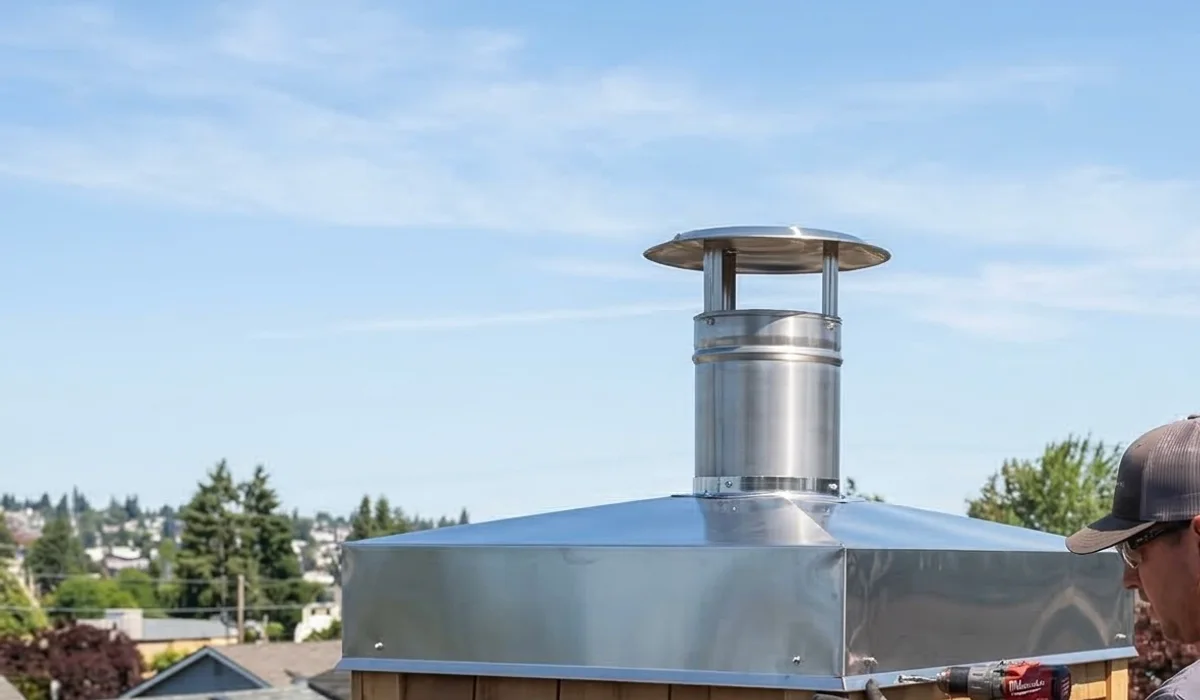
A chimney cap belongs to a masonry chimney. It sits on top of the brick or stone stack, usually fitted over the clay flue tile, with a mesh cage around it and a cover that shelters the opening. A chase cover belongs to a prefabricated chimney system built around a metal flue, where the visible exterior is a framed wood or vinyl enclosure rather than solid masonry. The cover is a flat or pitched metal lid that spans the top of the enclosure.
Knowing which you have is the first step before any top-of-chimney repair.
What Is a Chimney Cap and How Does It Fail?
A chimney cap is a relatively simple component. It fits over the flue tile opening at the top of a masonry chimney and has three functions: it keeps rain and snow out of the flue, it keeps birds and animals from nesting in the liner, and it contains sparks that might otherwise land on the roof.
Caps fail in a few predictable ways:
Physical damage: Caps take direct wind, ice, and debris impact at the top of the chimney. Damaged mesh or cracked cap covers are common on older homes after winter.
Fit failure: A cap that was never the right size for the flue tile, or one that has shifted on its mounting, allows water to enter around the cap edges even when the cap itself is intact.
Rust-through on metal caps: Steel caps, including galvanized steel, eventually corrode in the Chicagoland climate. A rusted-through cap allows water entry and can drop rust debris into the flue.
Missing entirely: Caps get removed during chimney work and not replaced, or they blow off in high winds and the homeowner does not notice from ground level.
A missing or failed cap is one of the more common findings on a chimney inspection. NFPA 211 calls for at least one inspection per year for any chimney in service, and a cap check is part of a Level I visual inspection of accessible portions.
What Is a Chase Cover and How Does It Fail?
A chimney chase is the wood-framed or manufactured enclosure that houses a prefabricated metal flue. From the exterior, a chase looks like a siding-covered column or box attached to or rising through the roofline, with one or more metal caps visible at the top opening. The chase cover is the metal lid that caps the entire enclosure, sitting over the framing with openings for the flue pipes to pass through.
Chase covers fail primarily through rust. The factory-installed covers that come with most prefab chimney systems are galvanized steel. Galvanizing delays corrosion but does not prevent it indefinitely. In Chicagoland’s climate with repeated freeze-thaw cycles each winter, plus seasonal rain and temperature swings, galvanized covers should be inspected for rust, ponding, and seam failure during annual service.
The failure progression is:
- Surface rust begins on the cover, often starting at seams or fastener points
- Rust spreads and the metal thins from both the top surface and the underside where condensation forms
- Small holes or open seams develop, allowing water to enter the chase enclosure
- Water enters the wood framing of the chase and begins to cause moisture damage inside the enclosure
- Interior ceiling staining appears near the fireplace as water runs down the framing
The problem with this progression is that steps 1 through 4 are largely invisible from the ground. By the time a homeowner notices a ceiling stain at step 5, the cover has often been failing for more than one season and the interior framing has been exposed to ongoing moisture.
Identifying Which System You Have
Walk outside and look at the chimney. These are the indicators:
Masonry chimney with a cap: The exterior surface of the chimney stack is brick, stone, or stucco masonry from ground to top. At the top you may see a clay flue tile extending above the crown, with a metal cap over the tile. The cap typically has a mesh cage and a roof-like cover.
Prefab chimney with a chase cover: The chimney exterior is sided (vinyl, wood, or fiber cement) or clad in a material that matches the house. The top is covered by a flat or slightly pitched metal lid with one or more circular openings where the metal flue pipes extend. The sides of the enclosure do not look like masonry from the ground.
Some homes have both systems if additions were done at different times. It is also possible to have a masonry chimney at the base that transitions to a prefab flue inside, particularly on older homes that were converted from one appliance type to another.
Material Choices When Replacing a Chase Cover
When a chase cover replacement is needed, material selection is the most consequential decision:
Galvanized steel: The most common and least expensive option. It is the same material as most factory covers. Given that it is what failed in the first place, a galvanized replacement should be treated as the shorter-life option under similar exposure conditions.
Stainless steel: Significantly more corrosion-resistant than galvanized. The material cost premium is relatively small compared to the labor of a second replacement. For a homeowner who does not want to address the cover again in a decade, stainless is the practical choice.
Copper: The longest-lasting option for a residential chimney component. It does not rust and develops a patina over time. Appropriate for applications where the cover will be visible and longevity is the priority.
The right choice depends on budget, how long the homeowner plans to be in the house, and how visible the cover is from the ground. A written estimate should show the price difference between material options so the homeowner can make an informed decision.
How Cap and Cover Problems Connect to Other Chimney Issues
Neither a failed cap nor a failed chase cover occurs in isolation. On masonry chimneys, a missing or failing cap typically coincides with crown deterioration, because both components are at the top of the chimney and face the same weather exposure. Replacing the cap without addressing a cracked crown solves half the problem.
On prefab chase systems, a failing cover may allow water entry that has been ongoing for long enough to damage the wood framing inside the chase, the flashing at the roofline, and the interior trim around the fireplace insert. An inspection of the full system, not just the cover, is needed to scope the total repair.
For the masonry chimney side of this, see the chimney cap and crown post, which covers how the crown and cap work together as the chimney’s primary defense against water entry. For what a complete system inspection covers, see the chimney inspection guide for Chicagoland homeowners.
For homeowners with chase systems wondering about the interior components, the what is a chimney chase post covers how the chase enclosure and prefab flue system work and how each component fails.
Scheduling a Cap or Chase Cover Inspection
Delta - Chimney Repair and Services handles chase cover replacement and chimney cap repair and installation across the North Shore and northwest suburbs. We have been dispatching from our Park Ridge office since 1987 and use no subcontractors.
We serve Skokie, Des Plaines, Glenview, and Niles, along with the broader Chicagoland area. A written estimate needs an on-site assessment. Call (847) 685-1043 or use our contact form to schedule.
A rusted chase cover is invisible from the ground until it has already been draining water into the chase enclosure for a season or two.
Sources and Standards
- NFPA 211: Standard for Chimneys, Fireplaces, Vents, and Solid Fuel-Burning Appliances National Fire Protection Association Defines the three chimney inspection levels and the annual inspection standard.
- International Residential Code, Chapter 10: Chimneys and Fireplaces International Code Council Residential code for chimney and fireplace construction and clearances.
- International Residential Code, Section R1003: Masonry Chimneys International Code Council Code provisions specific to masonry chimney construction.
- Preservation Brief 2: Repointing Mortar Joints in Historic Masonry Buildings U.S. National Park Service Guidance on matching mortar for historic and soft-brick chimney repair.
- ASTM C270: Standard Specification for Mortar for Unit Masonry ASTM International Mortar types and minimum compressive strengths used in chimney masonry repair.
- Great Lakes Freeze-Thaw Climate Data GLISA, University of Michigan Freeze-thaw cycle data for the Great Lakes region.
Fact-checked against the above sources on 2026-05-21.
Pre-Heating-Season Inspection and Sweep (Aug-Oct)
Chimney work runs on a calendar. This is what matters for a Chicagoland home in the window you are reading this.
- The Annual Chimney Inspection: What It Covers NFPA 211's annual cadence means the inspection belongs before the first fire of the season, not after.
- Why Fall Is the Best Time to Schedule a Chimney Sweep Answers the exact timing question homeowners are searching right now, before appliances go back into daily use.
- Fall Chimney Checklist: Before You Light the First Fire A complete pre-season checklist for everything to confirm before heating season starts.
- Chicagoland Seasonal Chimney Inspection Timing: When to Book Chicagoland-specific timing guidance for when to book, tied to local weather patterns.
- Heating Season Chimney Safety for Chicagoland Confirms the flue is clear and the liner is sound before regular winter use begins.
- Holiday Fireplace Safety: Before You Light the Fire What to check before lighting the fire for holiday gatherings, when the fireplace sees its heaviest seasonal use.
- Carbon Monoxide and Your Chimney Carbon monoxide risk rises with active heating-season use; this covers how a chimney problem creates that risk.
- Chimney Fire: Warning Signs and Prevention Creosote accumulated over active winter use is the direct driver of chimney fire risk.
- Freeze-Thaw Damage: What January Does to Your Chimney Where winter's freeze-thaw cycling shows up as visible masonry damage each spring.
- Post-Winter Chimney Checklist for Chicagoland A structured checklist for what to look at once the freeze-thaw season has passed.
- Spring Chimney Inspection: Reading Winter's Damage The seasonal inspection built specifically around catching winter's damage before it worsens.
- Cracked Chimney Crown: Causes and Repair The crown takes the most direct freeze-thaw damage of any component; what a crack there actually means.
- Why Spring Is the Right Time to Rebuild a Chimney Mortar needs consistently warm temperatures to cure properly, which is why spring opens the rebuild season.
- Summer Is the Best Time for Major Chimney Work The case for why summer, not winter, is when masonry work should actually be scheduled.
- Chimney Masonry Repair: Brick, Mortar, and Crown The comprehensive masonry repair guide for the season when that work can actually be done correctly.
- Tuckpointing a Chimney: When Mortar Joints Fail Tuckpointing mortar needs the same curing conditions as a full rebuild, which is why it's a warm-season job too.
The foundational concept the cap-versus-cover terminology posts both assume the reader already has.
Chase Cover Replacement FAQs
01 How do I know if my chimney has a chase cover or a chimney cap?
02 Why do chase covers rust and fail?
03 What is a chimney cap for and do all chimneys need one?
04 How long should a chase cover last?
05 Can a rusted chase cover be patched?
More Chase Cover Replacement Guides
Chase Cap or Chase Cover? The Terms People Mix Up and What You Actually Need
"Chase cap" isn't one part. Here's how it maps to the chase cover, the chimney cap, and the crown, and what a failed cover does to the framing underneath it.
Read article Chimney RepairWhat Is a Chimney Chase and How Does It Fail?
A chimney chase is the framed enclosure around a prefab metal flue. Learn how chases are built, how they fail, and what repair or replacement involves.
Read articleHave a Question About Your Chimney?
Documented condition, a plain explanation, and a recommended scope before any work.