

What Is a Chimney Chase and How Does It Fail?
A chimney chase is the framed enclosure around a prefab metal flue. Learn how chases are built, how they fail, and what repair or replacement involves.
The short version
- A chimney chase is a wood-framed exterior enclosure covered in siding or stucco that houses a prefabricated metal flue pipe -- it is not a masonry chimney and requires different maintenance.
- Homes built in the 1970s through the 2000s in the northwest suburbs and DuPage County commonly have prefab chase systems; if the fireplace vents through a siding-covered exterior structure rather than exposed brick, it is a chase.
- The chase cover at the top of the enclosure is the most common failure point; galvanized steel covers corrode from the underside -- where gas condensate collects -- before showing visible rust from the ground.
- Water entering through a failed cover runs inside the framed chase walls and can cause significant wood framing damage before interior stains become visible to the homeowner.
- Replacement covers are custom-fabricated to the chase footprint, typically in stainless steel for Chicagoland installations, and require an on-site inspection to confirm dimensions and assess any concurrent water damage.
Source check this article is cross-checked against CSIA inspection guidance, CDC carbon monoxide guidance, CPSC home heating safety guidance, and EPA wood-burning maintenance guidance.
A chimney chase is the framed exterior enclosure that houses a prefabricated metal flue pipe on the outside of a home. If your home was built in the 1970s through the 2000s and the fireplace vents through what looks like a chimney on an exterior wall but is covered in siding rather than exposed brick, that structure is almost certainly a chase, not a masonry chimney. Understanding the difference is important because chase maintenance and failure modes differ entirely from masonry chimney care.
This post explains how a chimney chase is constructed, what the critical components are, how chase systems fail, and what repair or replacement involves, with particular attention to the housing stock of the northwest suburbs and DuPage County where this system type is common.
How a Chimney Chase Is Built
A chimney chase is a framed enclosure, typically wood-framed with exterior sheathing covered by siding, vinyl, stucco, or fiber cement. Inside the chase, one or more prefabricated metal flue pipes run vertically from the fireplace or furnace connection to the chase top. The metal flue pipe is the functional component. The chase is the housing that protects it and gives the system an exterior profile similar to a masonry chimney.
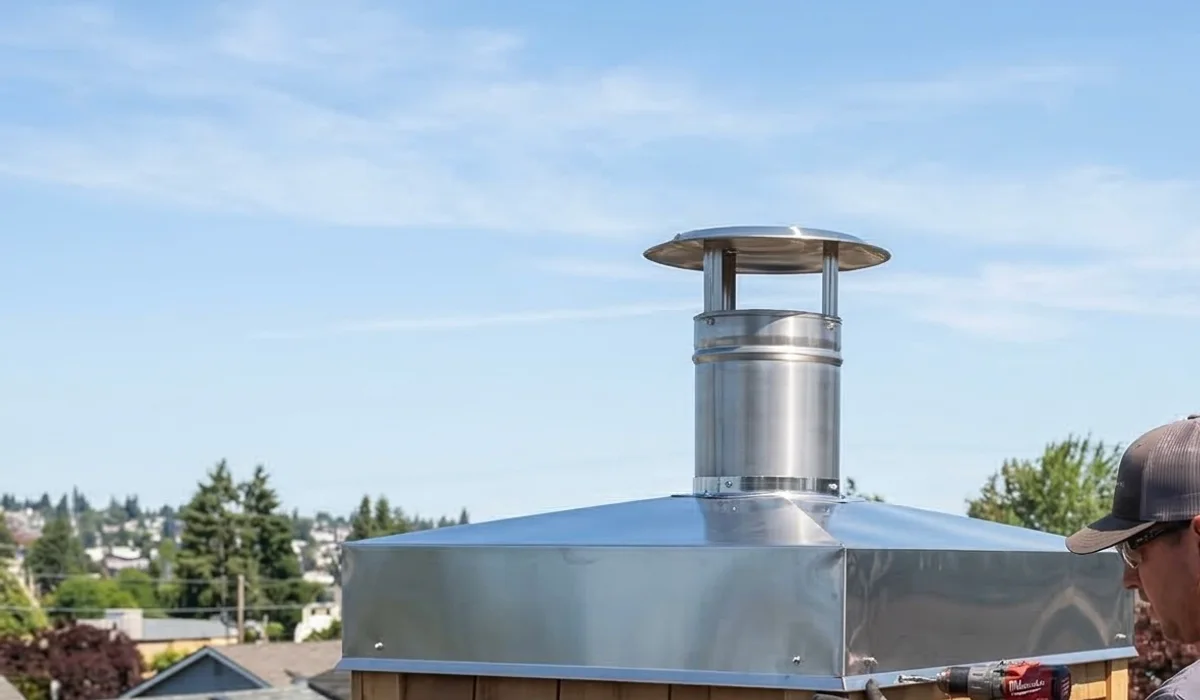
At the top of the chase, a metal panel called the chase cover seals the top of the framed structure. The chase cover has one or more penetrations where the flue pipe exits. A cap or round pipe surround sits at the flue pipe exit to prevent rain and animal entry at the pipe opening.
The critical difference from masonry is structural. A masonry chimney carries its own load and is an independent structural element. A chimney chase is a non-structural enclosure attached to the house framing. The chase does not carry the flue. The prefab flue pipe is a factory-manufactured metal system that handles the combustion gases independently of the chase around it.
Why Chases Are Common in the Northwest Suburbs
The housing stock in Bartlett, Hanover Park, Streamwood, Carol Stream, Glendale Heights, and Roselle concentrates heavily in the 1960s through the 2000s construction period. This is exactly when prefabricated metal flue systems became the standard for new residential construction. Masonry fireplaces and chimneys were more expensive to build, and prefab systems with manufactured chases offered the visual appearance of a traditional chimney at lower construction cost.
Knowing that your chimney is a chase, not masonry, is the first step to understanding what inspection and maintenance it actually needs. The care required is completely different, and applying masonry chimney expectations to a chase system leads to missed maintenance and overlooked failure points.
What the Chase Cover Does
The chase cover is the single most important maintenance item on a prefab chimney system, and it is the most common failure point.
The cover sits at the top of the chase, exposed to full sun, full weather, and the thermal cycling that defines a Chicagoland winter. It must seal the top of the wood-framed chase against rain and snow while allowing the flue pipe to pass through at the center. The flue pipe penetration is sealed by a flashing arrangement or a rubber collar that can deteriorate independently from the cover surface.
Galvanized steel is the standard material for original chase covers installed through the 1980s and 1990s. Galvanized steel’s zinc coating provides corrosion protection, but that coating depletes over time, particularly on gas-vented flues where the acidic condensate from combustion attacks the cover from inside. A cover installed in 1985 is now 40 years old. Even if it looks intact from the ground, the underside may have been corroding for years.
When the cover fails, water enters the chase interior. It runs down the inside of the chase walls and can reach the wood framing, the fireplace unit connection, and the floor structure. Water that enters at the cover level does not necessarily produce immediate visible symptoms. The interior of the chase is enclosed and the water may be absorbed by framing and insulation before it shows as a stain on an interior wall or ceiling. By the time a homeowner notices water damage from a failed chase cover, the structural damage inside the chase may be substantial.
The chimney cap and crown post explains how the chase cover and cap work together as the first line of defense against water entry, which is the same role the crown and cap play on a masonry chimney.
How Chase Covers Fail: The Failure Modes
Surface corrosion through the galvanized coating: The most common long-term failure. The zinc coating depletes and the steel beneath rusts. This is accelerated on the underside of the cover where condensate from gas flues collects. The cover may look acceptable from the ground while actively corroding on the underside.
Seam and fastener failure: Chase covers are often fabricated with seams at the corners and edges. These seams can open from thermal expansion and contraction cycling, allowing water to enter at the seam rather than through the cover surface. Similarly, fasteners through the chase siding or cover flange can back out over years of thermal movement, creating gaps.
Flue pipe penetration failure: The flashing or rubber collar at the pipe penetration is a separate maintenance item from the cover surface. A failed penetration seal allows water to run down the outside of the flue pipe and into the chase interior, even if the cover surface itself is sound. This failure mode is frequently misidentified as a cover problem when the actual repair target is the penetration seal.
Impact and wind damage: Tree limbs, hail, and sustained high winds can physically damage a cover. A dented or bent cover that no longer sits flat on the chase top leaves gaps at the perimeter. This type of damage is usually visible from the ground.
What Chase Inspection Covers
NFPA 211 annual inspection applies to prefab chimney systems as fully as to masonry. The inspection for a chase system covers:
- Chase cover condition from the roof, including surface corrosion, seam integrity, and penetration seal condition
- Cap condition, including mesh integrity and mounting security
- Visible exterior chase condition, including siding, flashing at the house wall, and any evidence of water staining or rot on the chase exterior
- Firebox unit condition, including firebox walls, door seals, and the connection to the metal flue at the bottom of the chase
- Flue pipe interior condition, which on prefab systems requires video inspection to confirm the liner sections are properly connected and undamaged
The does my chimney need a new liner post covers what liner inspection on prefab systems entails and when liner replacement applies to a metal flue.
Chase Cover Replacement: What the Process Involves
When a chase cover requires replacement, the process begins with measuring the chase top. Chase covers are typically custom fabricated because chases are built to varying dimensions and there is no universal standard size. The measurements are: overall chase top length, width, and the diameter and location of the flue pipe penetrations.
Replacement covers for Chicagoland installations are most commonly fabricated in stainless steel because galvanized steel has a shorter service life in the freeze-thaw and gas-condensate environment. A stainless steel cover installed today is an investment in a component that may not need replacement again for 20 or more years, unlike a galvanized replacement that will be on the same corrosion clock as the one it replaced.
The installation involves removing the old cover, inspecting the chase top perimeter and the flue pipe penetration for any rot or damage to the underlying structure, fabricating and installing the new cover, and reinstalling or replacing the cap at the same time. A concurrent cap replacement on a corroded-cover job ensures both protective components are fresh at once.
If the inspection finds water damage to the chase framing beneath the cover, the structural repair is addressed before or concurrent with the cover installation.
Connecting Chase Care to Broader System Health
A chimney chase is not isolated from the rest of the chimney system. A failed chase cover that allows water entry affects the prefab flue liner inside it. Metal flue liner sections that have been wet repeatedly may have corrosion at the pipe joints that compromises the integrity of the combustion gas path. A Level II NFPA 211 inspection with video scanning of the flue interior confirms whether the liner sections inside the chase are sound after a period of cover failure.
The chimney cleaning vs inspection post covers how inspection and cleaning relate for prefab systems, which accumulate different material than masonry flues. The annual chimney inspection post explains what NFPA 211 inspection covers across all chimney types.
Scheduling Chase Cover Replacement
Delta - Chimney Repair and Services has handled chase cover replacement across the northwest suburbs and DuPage County since 1987. We serve Hanover Park, Streamwood, Bartlett, and Carol Stream, along with the broader Chicagoland area.
Chase cover assessment and replacement is done alongside a full system inspection so the cover scope and any concurrent findings are covered in one mobilization and one written estimate. Call (847) 685-1043 or use our contact form to schedule.
A corroded chase cover looks intact from the ground but channels every rain directly into the wood framing of the chase. By the time interior water stains appear, the damage inside the chase is already significant.
Sources and Standards
- NFPA 211: Standard for Chimneys, Fireplaces, Vents, and Solid Fuel-Burning Appliances National Fire Protection Association Defines the three chimney inspection levels and the annual inspection standard.
- International Residential Code, Chapter 10: Chimneys and Fireplaces International Code Council Residential code for chimney and fireplace construction and clearances.
- CSIA Standard Operating Procedure: Level 1 Inspection of a Masonry Fireplace Chimney Safety Institute of America CSIA field procedure for routine Level 1 chimney and masonry fireplace inspection scope.
- Carbon Monoxide Poisoning Basics Centers for Disease Control and Prevention Public health guidance on CO risks, symptoms, detectors, and prevention.
- Home Heating Equipment and Carbon Monoxide Safety U.S. Consumer Product Safety Commission Consumer safety guidance on yearly inspection of fuel-burning heating systems, chimneys, flues, and vents.
Fact-checked against the above sources on 2026-05-21.
Pre-Heating-Season Inspection and Sweep (Aug-Oct)
Chimney work runs on a calendar. This is what matters for a Chicagoland home in the window you are reading this.
- The Annual Chimney Inspection: What It Covers NFPA 211's annual cadence means the inspection belongs before the first fire of the season, not after.
- Why Fall Is the Best Time to Schedule a Chimney Sweep Answers the exact timing question homeowners are searching right now, before appliances go back into daily use.
- Fall Chimney Checklist: Before You Light the First Fire A complete pre-season checklist for everything to confirm before heating season starts.
- Chicagoland Seasonal Chimney Inspection Timing: When to Book Chicagoland-specific timing guidance for when to book, tied to local weather patterns.
- Heating Season Chimney Safety for Chicagoland Confirms the flue is clear and the liner is sound before regular winter use begins.
- Holiday Fireplace Safety: Before You Light the Fire What to check before lighting the fire for holiday gatherings, when the fireplace sees its heaviest seasonal use.
- Carbon Monoxide and Your Chimney Carbon monoxide risk rises with active heating-season use; this covers how a chimney problem creates that risk.
- Chimney Fire: Warning Signs and Prevention Creosote accumulated over active winter use is the direct driver of chimney fire risk.
- Freeze-Thaw Damage: What January Does to Your Chimney Where winter's freeze-thaw cycling shows up as visible masonry damage each spring.
- Post-Winter Chimney Checklist for Chicagoland A structured checklist for what to look at once the freeze-thaw season has passed.
- Spring Chimney Inspection: Reading Winter's Damage The seasonal inspection built specifically around catching winter's damage before it worsens.
- Cracked Chimney Crown: Causes and Repair The crown takes the most direct freeze-thaw damage of any component; what a crack there actually means.
- Why Spring Is the Right Time to Rebuild a Chimney Mortar needs consistently warm temperatures to cure properly, which is why spring opens the rebuild season.
- Summer Is the Best Time for Major Chimney Work The case for why summer, not winter, is when masonry work should actually be scheduled.
- Chimney Masonry Repair: Brick, Mortar, and Crown The comprehensive masonry repair guide for the season when that work can actually be done correctly.
- Tuckpointing a Chimney: When Mortar Joints Fail Tuckpointing mortar needs the same curing conditions as a full rebuild, which is why it's a warm-season job too.
Chase Cover Replacement FAQs
01 What is a chimney chase?
02 How is a chimney chase different from a masonry chimney?
03 Why does the chase cover fail?
04 Can I tell if my chase cover has failed without getting on the roof?
05 What is involved in chase cover replacement?
06 Does a new chase cover require a permit?
More Chase Cover Replacement Guides
Chase Cap or Chase Cover? The Terms People Mix Up and What You Actually Need
"Chase cap" isn't one part. Here's how it maps to the chase cover, the chimney cap, and the crown, and what a failed cover does to the framing underneath it.
Read article Chimney RepairChase Cover vs Chimney Cap: The Difference
Chase cover vs chimney cap: learn what each component is, which type your chimney has, and what failure looks like on each system.
Read articleHave a Question About Your Chimney?
Documented condition, a plain explanation, and a recommended scope before any work.