

Chimney Flashing Leaks: Causes and Repair Options
Chimney flashing leaks are the top source of chimney-related roof water damage. Learn the causes, how to find the source, and what repair involves.
The short version
- Chimney flashing is the metal assembly that seals the joint between the chimney and the roof; when it fails, water enters at one of the most structurally sensitive points in the house.
- The most common failure mode is sealant cracking at the counter flashing-to-mortar joint, driven by thermal cycling and freeze-thaw stress.
- Roof replacement is the single most common trigger for new chimney flashing leaks — often because step flashing was not woven into the new shingle courses.
- Repair scope ranges from sealant refresh to full flashing replacement depending on what the inspection finds; flashing failure often accompanies concurrent crown or mortar joint deterioration.
Source check this article is cross-checked against EPA wood-burning maintenance guidance, CSIA inspection guidance, and NFPA 211.
Flashing failure is a frequent source of chimney-related water damage in homes across Chicagoland. The flashing is the metal assembly that seals the joint between your chimney and the roof, and when it fails, water enters the house at one of the most structurally sensitive locations: where a masonry column penetrates the roof plane. This post covers why chimney flashing fails, how to identify the source of a flashing leak, and what repair involves.
What Chimney Flashing Is and How It Works
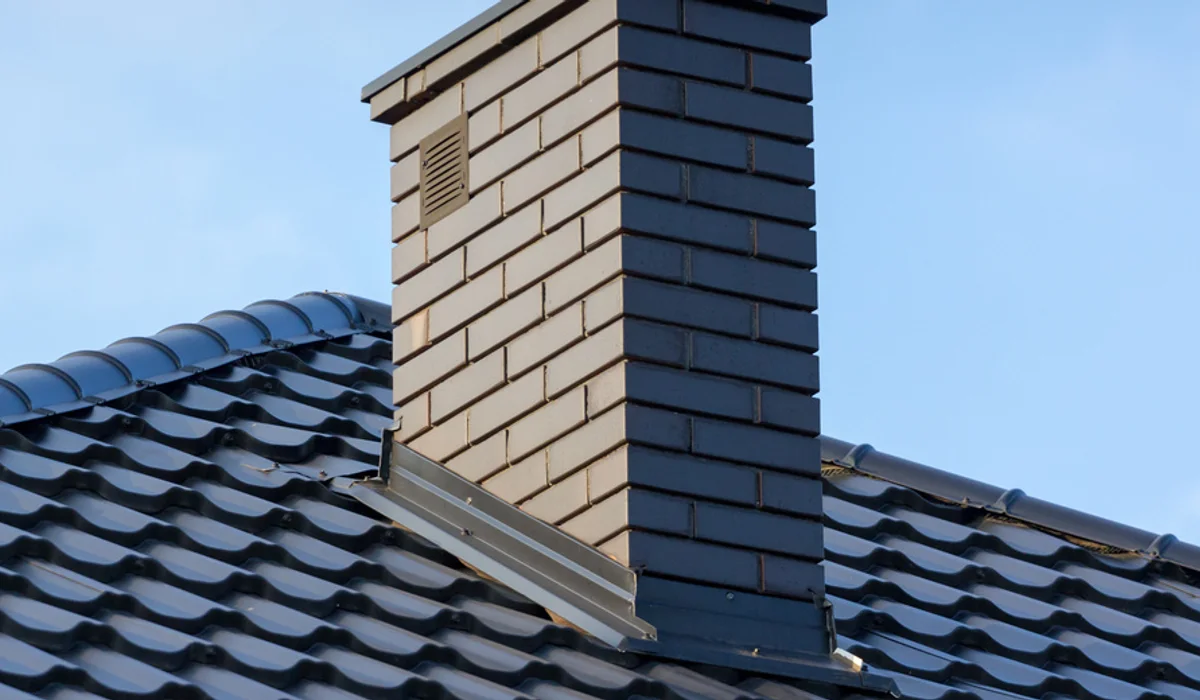
Chimney flashing is a multi-layer metal system that waterproofs the joint between the chimney and the roof. A properly installed flashing system includes three main components:
Step flashing: Individual pieces of metal bent at 90 degrees and woven into the shingle courses along the sides of the chimney. Each piece overlaps the next course below, creating a stepped drainage path that carries water away from the chimney face and onto the roof surface.
Counter flashing: Metal embedded in the chimney mortar joints that laps over the top edge of the step flashing. The mortar joint embedding seals the top edge, and the overlap with the step flashing below creates a two-layer barrier. Counter flashing is the component most often seen from the ground; it is the metal band that runs along the chimney face at the roof level.
Rear cricket or saddle: On wider chimneys, a cricket is needed behind the chimney to deflect water around the base. Without a cricket, water ponds against the back of the chimney, accelerating flashing failure and creating a persistent water concentration point at the chimney base.
All three components work together. Failure in any one creates a water path into the structure. The most common failure mode is the sealant between the counter flashing and the mortar joint cracking and separating, which allows water to enter between the flashing and the chimney face.
Why Flashing Fails in Chicagoland’s Climate
Thermal cycling is the primary mechanical cause of flashing sealant failure. The metal flashing expands and contracts with temperature changes throughout the year. Sealant at the counter flashing-to-mortar joint is subjected to these movements for every heating and cooling cycle, and over years of cycling it loses elasticity and cracks. Chicagoland’s temperature range from below zero in January to 90-plus in July creates a large annual thermal swing that accelerates this process.
Freeze-thaw cycles compound the problem. Water that enters a hairline sealant crack freezes and expands, enlarging the crack. In inland Cook County’s repeated freeze-thaw cycles each winter, a minor sealant gap becomes a functional leak path within one to two seasons.
The Roof Replacement Trigger
Roof replacement is the single most common trigger for new chimney flashing leaks. A correct roof replacement should include either replacing the flashing entirely or re-integrating the existing flashing into the new shingle course pattern. When roofers skip this step or do it improperly, the first rain produces a leak.
The error pattern is consistent: step flashing not woven into the new shingle courses (laid flat on top of the shingles instead), counter flashing not re-embedded after the mortar joint was disturbed, or the rear joint between the counter flashing and chimney face left unsealed. All of these produce active leaks that trace directly to the chimney-roof junction.
For homeowners who have had a recent roof replacement and now have interior water staining near the chimney, our chimney flashing repair service covers the diagnosis and repair of post-replacement flashing failures.
Locating the Source of a Chimney Flashing Leak
Water entry at a chimney junction can trace to multiple sources: flashing failure, crown failure, a missing or failed cap, deteriorated mortar joints in the upper chimney, or a combination. A chimney inspection that traces the path from both the roof and the interior is the reliable way to separate these sources.
From the interior, the stain location gives clues:
- Staining on the ceiling immediately adjacent to the chimney, on the attic framing around the chimney penetration: likely flashing or upper masonry
- Staining on the interior chimney wall face below the roofline, not at the ceiling: often a combination of flashing and mortar joint failure
- Staining inside the firebox or on the firebox back wall: more likely crown, cap, or liner issue rather than flashing
From the roof, the inspection checks for lifted flashing edges, failed or absent sealant at the counter flashing-to-mortar joint, step flashing that is not woven into the shingle courses, and rear flashing condition and cricket presence or absence on wider chimneys.
What Flashing Repair Involves
The repair scope depends on what the inspection finds. Three levels of intervention are common:
Sealant refresh: When the flashing metal is in good condition and only the sealant joint between the counter flashing and chimney mortar has failed, cleaning the joint and applying a new polyurethane or EPDM sealant may resolve the leak. This is appropriate when the flashing geometry is correct and the metal is not corroded or lifted.
Counter flashing re-embedding: When the mortar joint embedding has failed or the counter flashing has pulled out of the joint, the repair involves removing the failing mortar in the relevant joint courses, re-embedding the counter flashing, and repointing with Type N mortar (ASTM C270, minimum compressive strength 750 PSI for above-grade residential). On historic brick, the mortar match is critical; using modern Portland-heavy mortar on pre-1920 soft brick accelerates spalling at the joint.
Full flashing replacement: When the step flashing or counter flashing metal has corroded through, has been improperly installed, or needs to be fully replaced to match a new roof system, the repair involves removing the affected flashing components and installing new material. Material choices include aluminum, galvanized steel, and copper. Copper is the longest-lasting option and is appropriate for Wilmette and Highland Park historic homes where the flashing may not be replaced again for decades.
For homes in Des Plaines and Arlington Heights where the housing stock spans multiple eras, the flashing repair approach depends on the chimney and roof configuration. In Des Plaines, the Des Plaines Community and Economic Development Department handles permits. The postwar ranch stock on the southern areas of the city often has side-of-house exterior chimneys with exposed step flashing on multiple roof faces, which creates more total linear flashing length and more potential failure points than a center-of-roof chimney.
How Flashing Failure Connects to Other Chimney Problems
Flashing failure does not occur in isolation on older chimneys. The same thermal cycling that cracks sealant also works on mortar joints, crown material, and cap fittings. A chimney with failing flashing often has concurrent crown cracking or mortar joint deterioration that contributes to the water entry.
Addressing the flashing in isolation without checking the crown, cap, and upper mortar may not fully resolve the leak. A complete inspection documents which components are contributing to water entry so the repair scope covers all of them in one mobilization rather than requiring a return visit.
The chimney crown repair post covers the crown component specifically, and signs your chimney needs repair before winter covers the ground-level indicators that often accompany flashing failure. The chimney inspection guide for Chicagoland homeowners details what NFPA 211 inspection covers at each component level.
Schedule Your Flashing Inspection and Repair Estimate
Delta - Chimney Repair and Services has handled chimney flashing repair across the North Shore and northwest suburbs since 1987. We serve Oak Park, Evanston, Des Plaines, and Skokie, along with the broader Chicagoland area.
We trace the leak source before recommending a repair scope, and we provide a written estimate that separates the flashing work from any concurrent crown, cap, or masonry findings. Call (847) 685-1043 or use our contact form to schedule your inspection.
Failed flashing is the number one cause of chimney-related roof leaks, and the most common repair we do after a new roof goes on a home.
Sources and Standards
- NFPA 211: Standard for Chimneys, Fireplaces, Vents, and Solid Fuel-Burning Appliances National Fire Protection Association Defines the three chimney inspection levels and the annual inspection standard.
- International Residential Code, Chapter 10: Chimneys and Fireplaces International Code Council Residential code for chimney and fireplace construction and clearances.
- Great Lakes Freeze-Thaw Climate Data GLISA, University of Michigan Freeze-thaw cycle data for the Great Lakes region.
- ASTM C270: Standard Specification for Mortar for Unit Masonry ASTM International Mortar types and minimum compressive strengths used in chimney masonry repair.
- Chimney Safety Institute of America: Inspection and Sweep Standards Chimney Safety Institute of America Industry standards for chimney inspection and the value of certified technicians.
- CSIA Standard Operating Procedure: Level 1 Inspection of a Masonry Fireplace Chimney Safety Institute of America CSIA field procedure for routine Level 1 chimney and masonry fireplace inspection scope.
Fact-checked against the above sources on 2026-05-21.
Pre-Heating-Season Inspection and Sweep (Aug-Oct)
Chimney work runs on a calendar. This is what matters for a Chicagoland home in the window you are reading this.
- The Annual Chimney Inspection: What It Covers NFPA 211's annual cadence means the inspection belongs before the first fire of the season, not after.
- Why Fall Is the Best Time to Schedule a Chimney Sweep Answers the exact timing question homeowners are searching right now, before appliances go back into daily use.
- Fall Chimney Checklist: Before You Light the First Fire A complete pre-season checklist for everything to confirm before heating season starts.
- Chicagoland Seasonal Chimney Inspection Timing: When to Book Chicagoland-specific timing guidance for when to book, tied to local weather patterns.
- Heating Season Chimney Safety for Chicagoland Confirms the flue is clear and the liner is sound before regular winter use begins.
- Holiday Fireplace Safety: Before You Light the Fire What to check before lighting the fire for holiday gatherings, when the fireplace sees its heaviest seasonal use.
- Carbon Monoxide and Your Chimney Carbon monoxide risk rises with active heating-season use; this covers how a chimney problem creates that risk.
- Chimney Fire: Warning Signs and Prevention Creosote accumulated over active winter use is the direct driver of chimney fire risk.
- Freeze-Thaw Damage: What January Does to Your Chimney Where winter's freeze-thaw cycling shows up as visible masonry damage each spring.
- Post-Winter Chimney Checklist for Chicagoland A structured checklist for what to look at once the freeze-thaw season has passed.
- Spring Chimney Inspection: Reading Winter's Damage The seasonal inspection built specifically around catching winter's damage before it worsens.
- Cracked Chimney Crown: Causes and Repair The crown takes the most direct freeze-thaw damage of any component; what a crack there actually means.
- Why Spring Is the Right Time to Rebuild a Chimney Mortar needs consistently warm temperatures to cure properly, which is why spring opens the rebuild season.
- Summer Is the Best Time for Major Chimney Work The case for why summer, not winter, is when masonry work should actually be scheduled.
- Chimney Masonry Repair: Brick, Mortar, and Crown The comprehensive masonry repair guide for the season when that work can actually be done correctly.
- Tuckpointing a Chimney: When Mortar Joints Fail Tuckpointing mortar needs the same curing conditions as a full rebuild, which is why it's a warm-season job too.
Once the problem is identified, cost is the next question every homeowner has before calling.
Chimney Flashing Repair FAQs
01 What is chimney flashing and why does it fail?
02 How do I know if my leak is from the chimney flashing vs. another source?
03 Can chimney flashing be repaired without replacing it?
04 Does a roof replacement affect chimney flashing?
05 What does chimney flashing repair cost in Chicagoland?
More Chimney Flashing Repair Guides
Chimney Flashing Problems: How to Tell Which Part Is Leaking
Chimney flashing problems produce distinct stain patterns depending on which component failed. Match what you can see from the ground, attic, or inside the house to the likely cause before you call for repair.
Read article Chimney RepairWhat Changes the Price of Chimney Work in Chicagoland
Why two contractors quoting the same Chicagoland chimney can hand you two different numbers, and what a homeowner should compare line by line before signing.
Read article Chimney RepairHow Weather and Lake Michigan Affect Chimneys
Lake Michigan chimney damage on the North Shore follows predictable patterns. Learn how lakefront climate accelerates mortar failure, crown cracking, and liner deterioration.
Read article Seasonal MaintenanceSummer Is the Best Time for Major Chimney Work
Summer chimney repair lets mortar cure properly, contractors are available, and you beat the fall rush. Here is why summer scheduling pays off.
Read articleHave a Question About Your Chimney?
Documented condition, a plain explanation, and a recommended scope before any work.