
Why DIY Chimney Cleaning Misses the Real Problem
DIY chimney cleaning can remove surface soot but misses Stage 2 and Stage 3 creosote, structural cracks, and liner damage. Learn what a professional sweep actually covers.
The short version
- DIY brush kits remove Stage 1 creosote (loose, flaky soot) from the lower flue. They do not remove Stage 2 or Stage 3 creosote, which require specialized equipment, and they cannot assess the upper flue, liner condition, or smoke chamber.
- The inspection component is what finds what the brush misses: cracked or displaced liner sections, smoke chamber failures, creosote stage in the upper flue, and cap and crown condition.
- A professional sweep combines deposit removal with a documented assessment. A cleaned flue with unrepaired liner cracks is a cleaner version of the same hazard.
- Schedule before heating season (late summer or early fall) so any structural findings from the inspection can be repaired before the freeze.
Source check this article is cross-checked against CSIA inspection guidance, CDC carbon monoxide guidance, CPSC home heating safety guidance, and EPA wood-burning maintenance guidance.
DIY chimney cleaning kits exist, and the brushes they include do remove loose soot from the lower flue. That part works as advertised. What the brush cannot do is assess the condition of the flue liner, identify creosote at Stage 2 or Stage 3 hardness, check the smoke chamber, or find the hairline crack in a clay tile three feet above where you stopped brushing. The cleaning is only part of what needs to happen every year, and it is the easier part.
This post covers what diy chimney cleaning does and does not accomplish, what a professional sweep actually covers, and the specific conditions that homeowners miss when they clean but skip the inspection component.
What DIY Chimney Cleaning Actually Removes
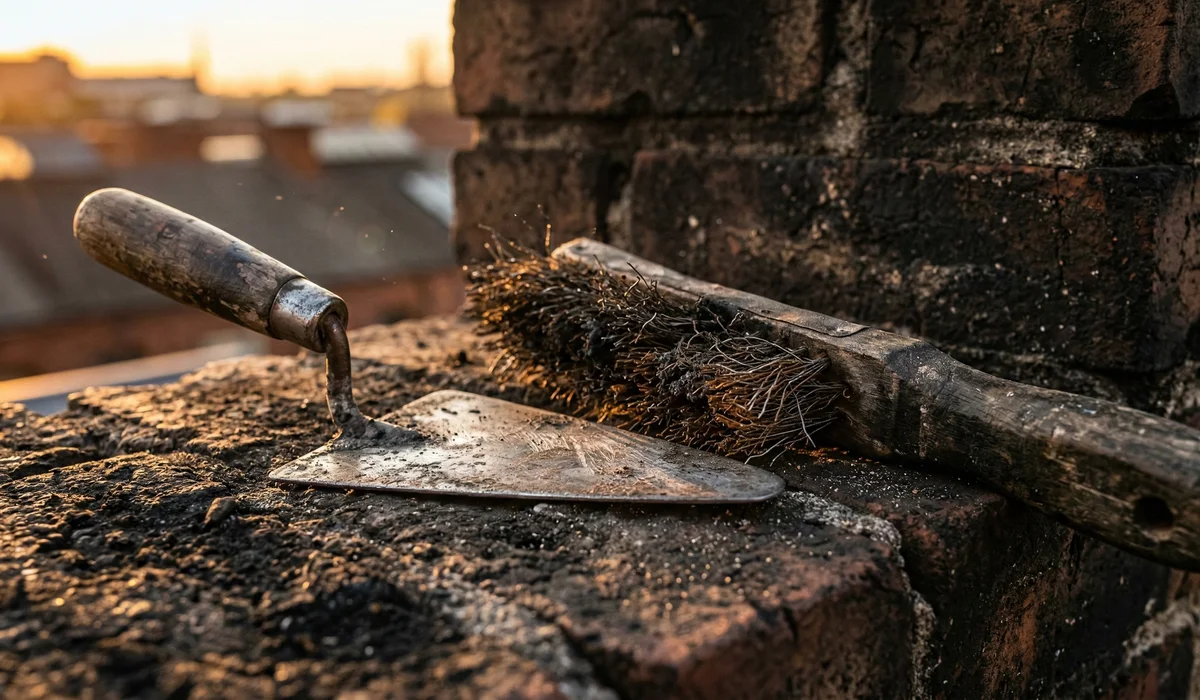
A standard hardware-store brush kit lets you push a wire brush through the flue from above or below. If you are working from below, you close off the firebox opening with a drop cloth or plastic sheet, push the brush sections up through the damper, and sweep deposits from the flue walls into a collection area.
This removes Stage 1 creosote: the light, flaky, brushable soot that accumulates on flue walls from normal use. Stage 1 deposits come off with a standard wire brush and do not require specialized equipment. Removing them from the visible lower section of the flue is straightforward and the brush kit is effective at that specific task.
What it does not remove:
- Stage 2 creosote: Hard, shiny, tar-like flakes that adhere to the flue tile and do not brush off. Stage 2 requires a heavier rotary or scraping brush and typically takes longer per linear foot of flue.
- Stage 3 creosote: Glazed, hardened creosote that coats the flue interior like a shell. This is the highest chimney-fire risk. Stage 3 often requires chemical treatment before mechanical removal and in some cases requires flue work to address completely.
A homeowner pushing a standard brush through the flue cannot confirm what stage the deposits are at the upper flue, at the transition to the liner, or in the smoke chamber. Those areas are not visible from below.
What Happens in the Flue Above the Firebox
Clay tile liner sections in this stock are 50 to 60 years old. Tile joints can fail from thermal cycling over that span. Individual tile sections can crack or displace. These failures create gaps in the liner that allow combustion gases, including carbon monoxide, to migrate into the wall cavity or living space. A wire brush does not identify displaced liner sections or cracked tile. It also does not tell you whether the gap you might clean over is cosmetic or structural.
The Inspection Component and Why It Matters More Than the Brush
NFPA 211 is the industry standard commonly used for annual inspection planning on chimneys in service. The inspection standard covers three levels: Level I is a visual inspection of readily accessible portions. Level II adds video scanning of the flue interior, required when appliances change or at property sale. Level III covers concealed areas for suspected serious hazards.
An annual Level I inspection of a well-maintained chimney with no history of chimney fire or appliance change covers the accessible portions, including the firebox, smoke chamber as seen from below, and the exterior chimney surfaces. A Level I that finds unusual deposits or a flue that has not been recently inspected typically leads to recommending Level II video scanning.
What the inspection finds that the brush never touches:
- Cracked, displaced, or missing clay flue tile sections
- Smoke chamber condition (parging failures, gaps)
- Damper operation and seating
- Creosote stage in the upper flue
- Cap and crown condition from the roof
- Exterior masonry condition, mortar joints, and spalling
The Gap Between What Feels Clean and What Is Safe
The feedback you get from a DIY cleaning is visual: the firebox looks clean, the brush brought down a pile of soot, and the flue seems clear when you shine a flashlight up from below. That feedback is real but incomplete.
The flue that looks clear from the firebox may have Stage 2 deposits at the constriction point where the liner narrows, which you cannot see from below. The smoke chamber, directly above the firebox, can have parging failures and debris accumulation that are not visible from the firebox and are not addressed by brushing the flue. A chimney fire risk is not directly correlated to what you can observe from the firebox level.
A professional chimney sweep and inspection combines deposit removal with the assessment components. The difference is not just tools: it is the ability to identify what stage the deposits are at, whether the liner is intact, whether the smoke chamber has failed, and whether the cap and crown are keeping water out.
What the Post-Cleaning Assessment Covers
After a professional cleaning, you have:
- Deposit stage confirmed and documented
- Full flue interior assessed (via video on Level II, visual on Level I)
- Smoke chamber condition evaluated
- Firebox and damper checked
- Cap and crown inspected from the roof
- Any structural findings written up separately from the cleaning
That documentation is the part that matters for safety and for future maintenance planning. It tells you whether the flue is in good condition or whether there are repairs that need to happen before next heating season.
For homeowners who want to understand the sweep and inspection relationship in more detail, our post on chimney cleaning vs inspection covers the distinct roles of each. For the full picture of what NFPA 211 inspection levels cover, see level I vs level II chimney inspection and the annual chimney inspection post.
The chimney creosote stages post covers the three stages in detail, including what Stage 2 and Stage 3 look like and what each requires to address.
What a Professional Sweep Cannot Fix
The sweep removes the deposits. It does not repair structural deficiencies that made those deposits possible. If the liner has cracked sections, cleaning reveals them but does not repair them. If the crown has failed and moisture has been entering the flue, accelerating creosote activation, the chimney crown repair is a separate job. If the cap is missing and animals or debris have been entering the flue, the cap replacement follows the cleaning.
This is why the inspection component of a professional sweep matters. The sweep removes what is there. The inspection documents why it got that way and whether the structure is in condition to continue safely. A cleaned flue with unrepaired liner cracks is a cleaner version of the same hazard.
The Timing Question
The best time for a chimney cleaning and inspection is before the heating season, not during it. Scheduling in late summer or early fall gives you the deposit removal and inspection results before you light the first fire. Any structural findings identified in September or October can be repaired before the freeze that makes outdoor masonry work more difficult.
A DIY cleaning in October, done quickly before the weather turns, tends to clean what is easy to reach and leave the assessment undone entirely. The homeowner feels like the maintenance is handled. The liner crack that was there before the cleaning is still there after it.
In Arlington Heights, fall scheduling fills quickly because the housing stock spans enough eras that many homeowners are on an annual inspection cadence. Contacting a chimney service company in August or September produces better scheduling flexibility than waiting until the first cold snap. For the full pre-season checklist, our fall chimney checklist covers what to address before heating season begins.
Scheduling Your Annual Chimney Cleaning and Inspection
Delta - Chimney Repair and Services has handled chimney cleaning and inspection across the northwest suburbs and Chicagoland since 1987. We serve Rolling Meadows, Palatine, Streamwood, and Arlington Heights, along with the broader Cook County northwest suburbs.
We combine cleaning with a documented inspection so you know the deposit stage, the liner condition, and any structural findings in one visit. Call (847) 685-1043 or use our contact form to schedule your annual chimney service.
The brush gets the soot. The inspector finds the crack in the liner that the soot was hiding.
Sources and Standards
- NFPA 211: Standard for Chimneys, Fireplaces, Vents, and Solid Fuel-Burning Appliances National Fire Protection Association Defines the three chimney inspection levels and the annual inspection standard.
- Chimney Safety Institute of America: Inspection and Sweep Standards Chimney Safety Institute of America Industry standards for chimney inspection and the value of certified technicians.
- CSIA Standard Operating Procedure: Level 1 Inspection of a Masonry Fireplace Chimney Safety Institute of America CSIA field procedure for routine Level 1 chimney and masonry fireplace inspection scope.
- Carbon Monoxide Poisoning Basics Centers for Disease Control and Prevention Public health guidance on CO risks, symptoms, detectors, and prevention.
- Home Heating Equipment and Carbon Monoxide Safety U.S. Consumer Product Safety Commission Consumer safety guidance on yearly inspection of fuel-burning heating systems, chimneys, flues, and vents.
Fact-checked against the above sources on 2026-05-21.
Pre-Heating-Season Inspection and Sweep (Aug-Oct)
Chimney work runs on a calendar. This is what matters for a Chicagoland home in the window you are reading this.
- The Annual Chimney Inspection: What It Covers NFPA 211's annual cadence means the inspection belongs before the first fire of the season, not after.
- Why Fall Is the Best Time to Schedule a Chimney Sweep Answers the exact timing question homeowners are searching right now, before appliances go back into daily use.
- Fall Chimney Checklist: Before You Light the First Fire A complete pre-season checklist for everything to confirm before heating season starts.
- Chicagoland Seasonal Chimney Inspection Timing: When to Book Chicagoland-specific timing guidance for when to book, tied to local weather patterns.
- Heating Season Chimney Safety for Chicagoland Confirms the flue is clear and the liner is sound before regular winter use begins.
- Holiday Fireplace Safety: Before You Light the Fire What to check before lighting the fire for holiday gatherings, when the fireplace sees its heaviest seasonal use.
- Carbon Monoxide and Your Chimney Carbon monoxide risk rises with active heating-season use; this covers how a chimney problem creates that risk.
- Chimney Fire: Warning Signs and Prevention Creosote accumulated over active winter use is the direct driver of chimney fire risk.
- Freeze-Thaw Damage: What January Does to Your Chimney Where winter's freeze-thaw cycling shows up as visible masonry damage each spring.
- Post-Winter Chimney Checklist for Chicagoland A structured checklist for what to look at once the freeze-thaw season has passed.
- Spring Chimney Inspection: Reading Winter's Damage The seasonal inspection built specifically around catching winter's damage before it worsens.
- Cracked Chimney Crown: Causes and Repair The crown takes the most direct freeze-thaw damage of any component; what a crack there actually means.
- Why Spring Is the Right Time to Rebuild a Chimney Mortar needs consistently warm temperatures to cure properly, which is why spring opens the rebuild season.
- Summer Is the Best Time for Major Chimney Work The case for why summer, not winter, is when masonry work should actually be scheduled.
- Chimney Masonry Repair: Brick, Mortar, and Crown The comprehensive masonry repair guide for the season when that work can actually be done correctly.
- Tuckpointing a Chimney: When Mortar Joints Fail Tuckpointing mortar needs the same curing conditions as a full rebuild, which is why it's a warm-season job too.
Establishes the maintenance cadence that turns a one-time read into a standing appointment.
Chimney Sweep & Cleaning FAQs
01 Can I clean my own chimney with a brush kit from a hardware store?
02 How do I know if my chimney has Stage 2 or Stage 3 creosote?
03 What is the difference between chimney cleaning and inspection?
04 Is DIY chimney cleaning dangerous?
05 How often should a chimney be cleaned?
More Chimney Sweep & Cleaning Guides
Firewood Moisture Is the Variable That Decides Your Creosote Load
Wet firewood is the single largest controllable cause of creosote buildup. How moisture content changes what forms in your flue, and how to season and store wood in a Chicagoland climate.
Read article Chimney CleaningChimney Cleaning vs Inspection: Which Comes First?
Chimney cleaning and inspection are different services. Learn what each covers, how they relate, and the right order for Chicagoland homeowners.
Read article Chimney CleaningChimney Odor in Winter: Causes and Fixes
Chimney odor in winter usually traces to creosote, negative air pressure, or moisture. Learn what causes chimney smells and how to fix them before they get worse.
Read article Homeowner AdviceWhy Chimney Maintenance Saves Money Long-Term
Chimney maintenance cost is low compared to repair. See how annual inspection and cleaning prevent the expensive failures that accumulate unnoticed.
Read articleWant a Professional Opinion Before You Decide?
We will tell you straight whether the job is realistic to DIY or needs a pro.