

Gas Fireplace Maintenance: The Annual Check
Gas fireplace maintenance covers more than the burner. What the annual service includes, why venting still needs inspection, and what to check.
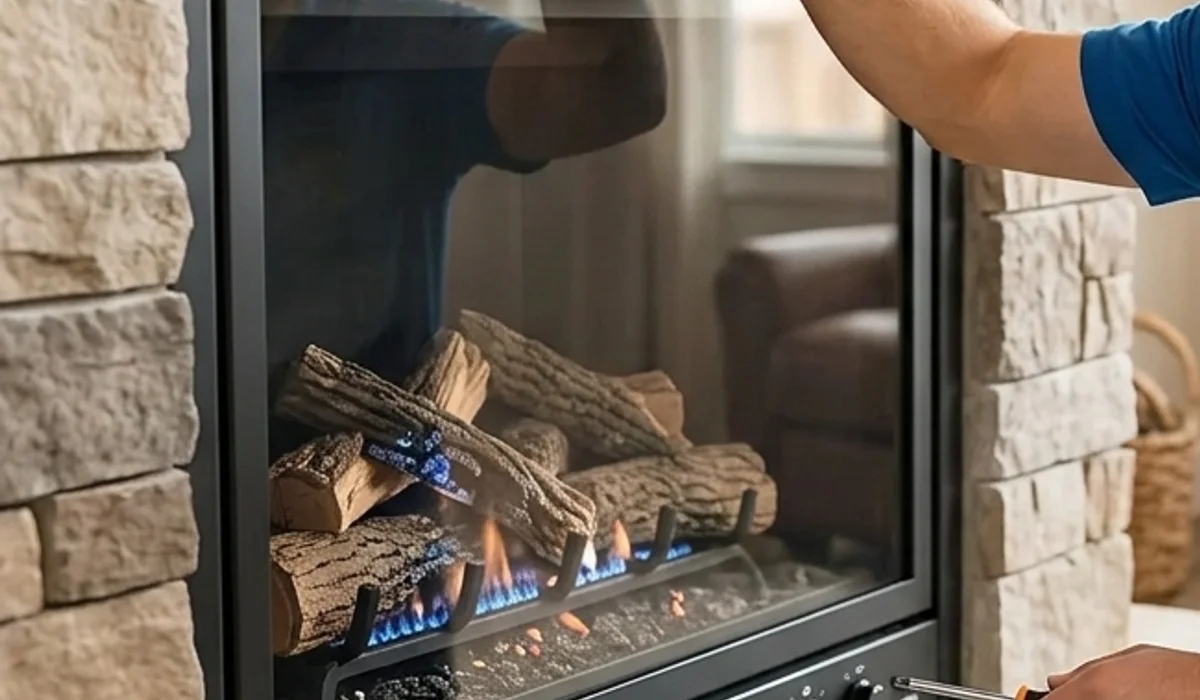
The short version
- Gas appliances and gas fireplaces depend on correct venting, liner condition, and appliance compatibility.
- If the appliance changed, the flue history is unknown, or a CO alarm occurred, use video inspection before relying on the chimney.
- Detector placement, emergency response, and appliance venting should follow official safety guidance and manufacturer instructions.
Source check this article is cross-checked against NFPA 54, CPSC home heating CO guidance, CDC carbon monoxide guidance, and CSIA Level 2 inspection guidance.
Gas fireplaces do not produce creosote and do not need sweeping. That is the extent of the maintenance simplification they offer. The rest of the annual service picture for a gas fireplace is close to that of any other chimney and venting system: combustion components age, venting connections develop problems, and the flue or liner serving the appliance requires inspection. NFPA 211 calls for at least one inspection per year for any chimney in service, and gas appliance venting falls within that standard.
The assumption that gas means maintenance-free is one of the more common reasons gas fireplace problems develop over years rather than being caught early. Annual gas fireplace maintenance is the check that finds the condition before it produces a symptom.
What Gas Fireplace Maintenance Covers
Annual gas fireplace maintenance has two parts: inspection and service of the appliance unit itself, and inspection of the venting system that carries combustion gases out of the house.
Appliance unit service covers:
The pilot assembly or electronic ignition system. The thermocouple or thermopile that confirms pilot flame presence and signals the gas valve to stay open. A thermocouple that is aging or out of position produces intermittent pilot failures before it fails completely. The burner orifices and burner condition. Blocked or deteriorated orifices produce irregular flame patterns and incomplete combustion. The gas valve. The firebox interior, ceramic log set, and ember material condition. The viewing glass, seals, and gaskets. The combustion air supply path. Gas fireplaces require adequate combustion air; a sealed direct-vent unit draws air from outside, while a vented unit draws from the room.
Venting system inspection covers:
The type of venting matters for scope. A gas insert installed in an existing masonry chimney with a stainless steel liner runs the liner through the full flue length; the liner termination at the chimney top, the liner connection to the insert, and the liner condition across its length are all part of the annual inspection. A direct-vent gas fireplace has a sealed two-pipe system through the exterior wall; the exterior termination cap and seals are the primary inspection points. A gas fireplace venting into the existing masonry chimney without a dedicated liner is a configuration that does not meet current NFPA 54 standards for gas appliance venting; those chimneys require relining before further use.
Gas Appliance Venting Under NFPA 54
Gas appliance venting is governed by NFPA 54, the National Fuel Gas Code, in addition to the NFPA 211 chimney inspection standard. NFPA 54 addresses the flue type, sizing, draft requirements, and installation requirements for gas appliances including fireplaces, inserts, and furnaces.
One of the most important points from NFPA 54 for homeowners with gas inserts in older masonry chimneys is that the existing masonry flue must be lined with an appropriately sized liner for the gas appliance. The original clay flue tile in a masonry chimney was sized for wood or coal combustion. Gas appliances produce different combustion byproducts, including water vapor and acidic condensate, that attack clay flue tile over time when the tile is exposed directly. A properly sized stainless steel liner contains these byproducts and is the current code-compliant configuration.
In Chicago, with the Chicago Department of Buildings governing structural permits, gas inserts installed in the city’s pre-WWII bungalow and greystone stock during the 1970s and 1980s conversions from coal and wood were not always installed with a properly sized liner. In these homes, the flue tile may have been exposed to gas combustion products for decades. NFPA 211 Level II video inspection of the liner condition is the appropriate assessment before any continued use of the appliance.
What the Venting Termination Cap Does
The termination cap at the top of the gas appliance flue does more than cover the opening. For a direct-vent system, the cap manages both the combustion gas exhaust and the combustion air intake. For a liner in a masonry chimney, the cap protects the liner from weather and excludes birds and debris.
Termination cap failures are more common than most gas fireplace owners expect. Rain infiltration through a damaged cap runs back down the liner and into the unit, causing rust, corrosion of the burner components, and eventual failure of the ignition system. A cap that has shifted or been damaged by a hail or wind event may not show obvious symptoms at the firebox level until corrosion has progressed inside the unit.
Carbon Monoxide and Gas Fireplace Maintenance
Gas combustion produces carbon monoxide as a byproduct. Under normal operation, the venting system carries CO out of the house. When the venting system fails, CO enters the living space. The failure modes include blocked venting, disconnected liner sections, failed seals at the unit-to-liner connection, and draft problems that push combustion gases back into the room instead of up the flue.
CO is colorless and odorless. The symptom is the CO detector alarm, which is why functioning CO detectors near gas appliances are essential. The maintenance visit is designed to identify the conditions that lead to venting failure before they produce a CO event.
If a CO detector alarms when your gas fireplace is operating: leave the home, call 911, and do not re-enter until emergency services have cleared the space. Do not attempt to diagnose the venting problem yourself, and do not use the fireplace again until the venting system has been inspected and repaired.
The carbon monoxide and chimney post covers the CO risk from gas appliances in detail, including the specific failure modes and what inspection looks for.
Gas Fireplaces in Converted Masonry Chimneys
A large portion of gas fireplace installations in Chicagoland involve converted masonry chimneys that originally served wood-burning fireplaces. These conversions are common in the region’s older housing stock and have their own inspection considerations beyond those of a purpose-built gas appliance.
Liner sizing. When a gas insert is installed in a masonry chimney, the liner must be sized for the appliance output, not for the original firebox geometry. The original clay flue tile is typically much larger than needed for a gas insert. The stainless liner is installed inside the clay tile and connects at the bottom to the insert and at the top to a correctly sized termination cap.
Clay tile condition. Even after a liner is installed, the clay tile condition below the liner matters. Severely damaged tile can produce structural problems that affect liner integrity over time. A Level II video inspection documents the tile condition alongside the liner.
Damper. A masonry fireplace damper may be left in place with the liner installed through it, or it may be removed to allow the liner to run cleanly. In some installations, the original damper position creates a turbulence point in the venting path. The annual inspection covers this connection.
The Annual Maintenance Visit: What to Expect
An annual gas fireplace maintenance visit is a combination of inspection and service, not just a visual check. The practical steps include:
Visual inspection of all accessible components at the firebox. Testing of the ignition system and pilot. Verification of burner flame character. Inspection of all accessible venting connections from firebox to termination. Cleaning of the burner and log set as indicated. Inspection of the termination cap from the exterior. Documentation of any findings that require follow-up.
On units with a liner in a masonry chimney, the visit also includes an assessment of whether a Level II video scan of the liner is warranted based on the age of the installation and any changes in performance noted.
Scheduling Gas Fireplace Maintenance Before Heating Season
Gas fireplace maintenance is most efficiently scheduled before the heating season begins rather than during it. The logistical reasons are simple: technician availability is better in late summer and early fall than in December and January, scheduling is more flexible, and any repair findings can be addressed before the appliance is needed.
The plan chimney work before heating season post covers the practical case for off-season scheduling for all chimney and fireplace work. The fall chimney checklist post provides a structured approach to pre-season review.
For homeowners who have not had their gas fireplace serviced in several years, the first visit after a gap may produce more findings than a routine annual maintenance visit. This is normal. The is my fireplace safe to use post covers the questions to answer before resuming use after a gap in service.
Schedule Your Gas Fireplace Maintenance
Delta - Chimney Repair and Services has provided fireplace maintenance services across Chicagoland since 1987. We serve Chicago, Oak Park, Evanston, and River Forest, along with the broader Cook County service area.
Every maintenance visit is documented in a written report. Written estimates are provided for any repair findings before work proceeds. Call (847) 685-1043 or use our contact form to schedule your annual gas fireplace service.
Gas fireplaces get used for years without issue, and then the first symptom is a carbon monoxide detector alarm. The annual maintenance visit is designed to find the condition that precedes that symptom.
Sources and Standards
- NFPA 211: Standard for Chimneys, Fireplaces, Vents, and Solid Fuel-Burning Appliances National Fire Protection Association Defines the three chimney inspection levels and the annual inspection standard.
- NFPA 54: National Fuel Gas Code National Fire Protection Association Governs venting for gas appliances and gas fireplaces.
- International Residential Code, Chapter 10: Chimneys and Fireplaces International Code Council Residential code for chimney and fireplace construction and clearances.
- Carbon Monoxide Poisoning Basics Centers for Disease Control and Prevention Public health guidance on CO risks, symptoms, detectors, and prevention.
- Home Heating Equipment and Carbon Monoxide Safety U.S. Consumer Product Safety Commission Consumer safety guidance on yearly inspection of fuel-burning heating systems, chimneys, flues, and vents.
- CSIA Standard Operating Procedure: Level 2 Inspection of a Factory-Built Fireplace Chimney Safety Institute of America CSIA field procedure for changed-use, sale, relining, fire, weather, or malfunction Level 2 inspection scope.
Fact-checked against the above sources on 2026-05-21.
Pre-Heating-Season Inspection and Sweep (Aug-Oct)
Chimney work runs on a calendar. This is what matters for a Chicagoland home in the window you are reading this.
- The Annual Chimney Inspection: What It Covers NFPA 211's annual cadence means the inspection belongs before the first fire of the season, not after.
- Why Fall Is the Best Time to Schedule a Chimney Sweep Answers the exact timing question homeowners are searching right now, before appliances go back into daily use.
- Fall Chimney Checklist: Before You Light the First Fire A complete pre-season checklist for everything to confirm before heating season starts.
- Chicagoland Seasonal Chimney Inspection Timing: When to Book Chicagoland-specific timing guidance for when to book, tied to local weather patterns.
- Heating Season Chimney Safety for Chicagoland Confirms the flue is clear and the liner is sound before regular winter use begins.
- Holiday Fireplace Safety: Before You Light the Fire What to check before lighting the fire for holiday gatherings, when the fireplace sees its heaviest seasonal use.
- Carbon Monoxide and Your Chimney Carbon monoxide risk rises with active heating-season use; this covers how a chimney problem creates that risk.
- Chimney Fire: Warning Signs and Prevention Creosote accumulated over active winter use is the direct driver of chimney fire risk.
- Freeze-Thaw Damage: What January Does to Your Chimney Where winter's freeze-thaw cycling shows up as visible masonry damage each spring.
- Post-Winter Chimney Checklist for Chicagoland A structured checklist for what to look at once the freeze-thaw season has passed.
- Spring Chimney Inspection: Reading Winter's Damage The seasonal inspection built specifically around catching winter's damage before it worsens.
- Cracked Chimney Crown: Causes and Repair The crown takes the most direct freeze-thaw damage of any component; what a crack there actually means.
- Why Spring Is the Right Time to Rebuild a Chimney Mortar needs consistently warm temperatures to cure properly, which is why spring opens the rebuild season.
- Summer Is the Best Time for Major Chimney Work The case for why summer, not winter, is when masonry work should actually be scheduled.
- Chimney Masonry Repair: Brick, Mortar, and Crown The comprehensive masonry repair guide for the season when that work can actually be done correctly.
- Tuckpointing a Chimney: When Mortar Joints Fail Tuckpointing mortar needs the same curing conditions as a full rebuild, which is why it's a warm-season job too.
The pillar guide that ties the season-specific maintenance posts into one annual routine.
Fireplace Maintenance FAQs
01 Do gas fireplaces need annual maintenance?
02 Does a gas fireplace have a chimney that needs inspection?
03 What are the signs that a gas fireplace needs service?
04 What is the difference between a gas insert and a gas fireplace?
05 Can I use my gas fireplace if the pilot light keeps going out?
More Fireplace Maintenance Guides
Buying a Home With a Fireplace: What to Check
Buying a home with a fireplace means knowing what to inspect before closing. A Level II chimney inspection is required at property transfer under NFPA 211 standards.
Read article FireplaceFireplace Maintenance: The Annual Service Explained
Fireplace maintenance keeps your heating system safe and efficient. Learn what an annual service covers, why it matters, and what to expect in Chicagoland.
Read article Chimney SafetyHoliday Fireplace Safety: Before You Light the Fire
Holiday fireplace safety starts with a clear flue, working damper, and no creosote buildup. What to check before the first fire of the season.
Read article Chimney SafetyIs Your Fireplace Ready for the Season?
A practical fireplace safety check before heating season: what to inspect yourself, what needs a professional, and when to stop and call for help.
Read articleHave a Question About Your Chimney?
Documented condition, a plain explanation, and a recommended scope before any work.