
Holiday Fireplace Safety: Before You Light the Fire
Holiday fireplace safety starts with a clear flue, working damper, and no creosote buildup. What to check before the first fire of the season.
Too Long To Read
- Stop using the fireplace or appliance if there is smoke rollback, CO concern, fire damage, liner damage, blocked flue, unusual odor, or visible structural movement.
- Safety posts should lead to inspection and documentation, not experiments with repeated fires or temporary fixes.
- Treat the inspection result as the decision point for cleaning, repair, relining, or taking the system out of service.
- Source check: this article is cross-checked against CSIA inspection guidance, CDC carbon monoxide guidance, CPSC home heating safety guidance, and EPA wood-burning maintenance guidance.
Holiday fireplace safety comes down to a short list of conditions that must be true before the fire is lit: the flue is clear, the damper opens fully, there is no significant creosote buildup from prior seasons, and the firebox and liner show no signs of structural damage. When all four are confirmed, a fireplace is safe for holiday use. When any one is unknown or questionable, it is not.
The holiday season is the peak demand period for residential fireplaces across Chicagoland. A fireplace that ran a handful of times in October may run for three or four hours straight during a December gathering. That change in load is exactly when deferred problems become active ones.
Why December Is the Highest-Risk Month for Fireplace Problems
Frequency and duration of use increase sharply in December. A fireplace that burned wood twice in October and three times in November may be used for multiple long fires in a single week during the holiday period. Extended burns raise flue temperatures significantly, and higher temperatures activate creosote deposits that were stable at lower temperatures.
At the same time, the flue has been through the full fall weather pattern: rain, temperature swings, possibly debris from trees that have shed their leaves. A flue without a cap has been open to falling debris and potentially to birds or squirrels looking for warm shelter.
The Damper: First Check, Every Year
Open the damper fully and look up into the flue with a flashlight before any fire. You are confirming two things: first, that the damper is mechanically opening all the way; second, that the flue above it is clear and not blocked.
A damper that opens partially but not fully restricts draft and causes smoke to back into the room. This is often mistaken for a chimney problem when it is a damper problem with a straightforward mechanical fix.
What you can see from the firebox with a light is limited but useful. If you see daylight (from the top of the chimney), the flue is clear of major obstructions. If you see a bird’s nest, a pile of debris, a small animal, or nothing but blackness even with a light, schedule an inspection before using the fireplace.
For a more complete flue check, NFPA 211 Level II inspection adds video scanning of the flue interior, which shows liner condition, creosote stage, and any blockages that are not visible from the firebox. Level II is the appropriate standard for a chimney that has not been inspected in more than a year or that has a history of heavy use.
Creosote and the Holiday Fire Risk
Creosote is the condensation product of incompletely burned wood combustion gases. It builds up inside the flue liner over time and goes through three stages. Stage 1 is light, flaky, and brushable, the result of good draft and properly seasoned wood. Stage 2 is hard, shiny, and tar-like, harder to remove and more hazardous. Stage 3 is glazed, hardened creosote, the highest chimney-fire risk and the condition that often requires specialized treatment or a liner evaluation for fire damage.
Holiday fires lit in a flue with Stage 2 or Stage 3 deposits are a fire hazard. The deposits do not need to be thick to ignite; they need to reach their ignition temperature, which is significantly lower than many homeowners assume. A rapid temperature rise from a large or prolonged fire is the trigger.
Annual sweeping is the standard recommended cadence per NFPA 211 and industry standards. A fireplace used for even a few cords of wood per year benefits from sweeping before the next season begins.
What Not to Burn: The Holiday Hazard List
The holiday season introduces combustion hazards that do not apply during the rest of the year:
Wrapping paper: Glossy and printed wrapping paper burns with a high, fast flame that produces large sparks and spikes the flue temperature rapidly. This is a documented chimney fire trigger. Do not burn wrapping paper.
Cardboard boxes: A large cardboard box produces an intense, brief fire that overloads the draft capacity of the flue. Sparks from cardboard are a primary source of ember ejection from the top of the chimney.
Artificial logs with packaging: Some manufactured fire logs are safe for residential fireplaces; others are not. Do not burn the packaging from any product.
Treated or painted wood: Holiday decoration materials, old furniture, or dimensional lumber from construction projects may be treated with preservatives or paints that produce toxic gases when burned.
Christmas trees: A dried Christmas tree burns intensely and rapidly enough to pose a serious fire risk in a residential fireplace. Do not attempt to dispose of a tree by burning it indoors.
Burn only split, seasoned hardwood that has been dried for at least one season. Well-seasoned wood burns cleaner, produces less creosote, and maintains a consistent, controllable flame.
Carbon Monoxide: The Invisible Risk
Carbon monoxide is produced in all combustion, including in a properly functioning fireplace. The risk is not from the combustion itself but from a blocked or restricted draft that causes combustion gases to back into the living space rather than exhaust up the flue.
NFPA 211 Level I inspection covers the flue opening and draft path for obvious obstructions. If you have carbon monoxide detectors in your home, confirm they are working before the heating season. Every bedroom floor should have a detector. If any CO detector alarms during fireplace use, stop using the fireplace immediately, open windows and doors, leave the home, and call emergency services. Do not wait for a chimney contractor.
A stuck damper, a partially blocked flue, or a blocked flue cap can all produce CO entry into the living space without any visible smoke signal. The problem can be present without smelling smoke or seeing discoloration. The detector is your only reliable alert.
Gas Fireplaces and Holiday Safety
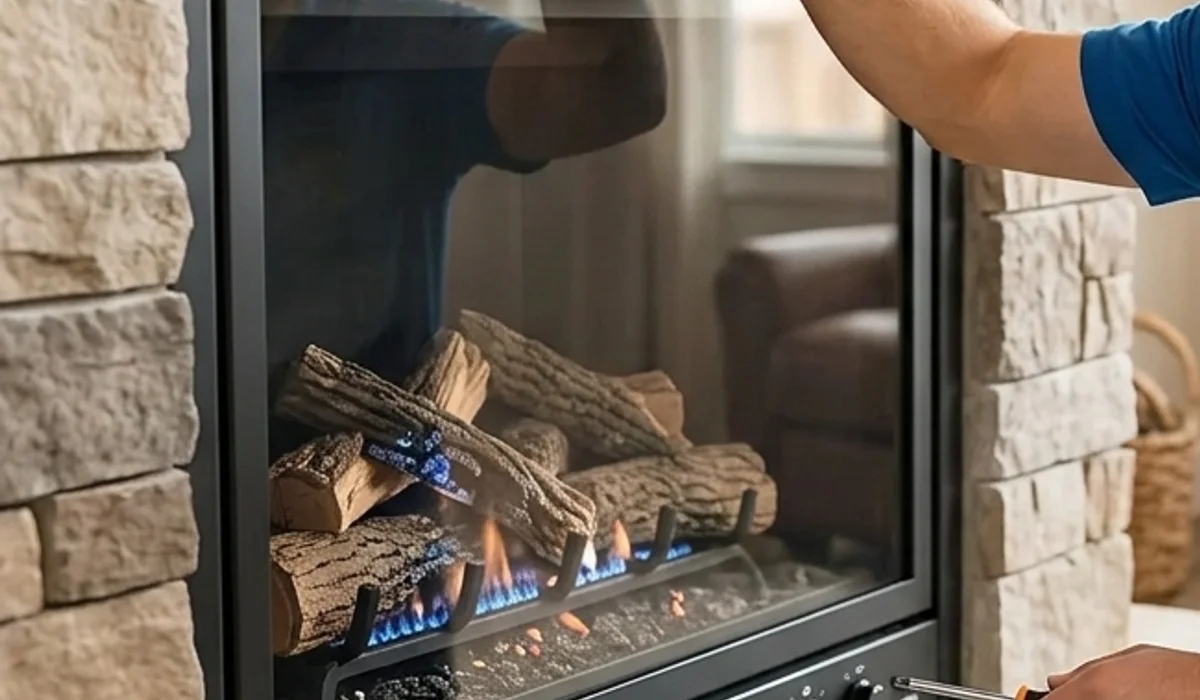
Gas fireplaces see the same holiday-season peak in use. The safety considerations differ from wood-burning but are equally real.
The primary annual check for a gas fireplace includes the pilot and ignition system, the burner function, and the integrity of the venting path. Gas appliance venting follows NFPA 54 standards. A gas fireplace that has been used through the fall without issue will generally perform reliably through the holiday season, but if you have noticed any ignition delays, unusual pilot behavior, or a slight gas odor, have it serviced before holiday use increases.
Before the First Holiday Fire: A Simple Checklist
Before lighting the first fire of the holiday season:
- Confirm the flue has been swept or inspected within the current calendar year per NFPA 211
- Open the damper fully and verify it operates without obstruction
- Look up the flue with a flashlight and confirm no debris or obstruction is visible
- Confirm a functional chimney cap is in place at the top
- Test CO detectors on all floors where the fireplace or HVAC exhaust paths exist
- Remove any decorative materials from the fireplace surround that could ignite from ember splash
- Have seasoned hardwood ready; do not plan to burn packaging, wrapping, or cardboard
If your fireplace has not been inspected this year, or if you cannot confirm any of the items above, schedule the inspection before the holiday fire season begins. A Level I NFPA 211 inspection covers all of these items and provides a written assessment.
Schedule Your Holiday Fireplace Inspection
Delta - Chimney Repair and Services handles fireplace maintenance and chimney inspection across the western suburbs and DuPage County. We have served the North Shore and northwest suburbs since 1987.
We serve Wheaton, Glen Ellyn, Naperville, and Downers Grove, and the broader Chicagoland service area.
If you are not sure whether your fireplace is ready for the holiday season, an inspection answers the question. Call (847) 685-1043 or use the contact form to schedule. The inspection provides a written assessment of current condition and any items that need attention before continued use.
For related reading, see our posts on fireplace safety checks, chimney fire prevention, and is my fireplace safe to use.
The fireplace gets more use in December than in any other month. That is exactly when it needs to have been inspected, not when problems first show up.
Sources and Standards
- NFPA 211: Standard for Chimneys, Fireplaces, Vents, and Solid Fuel-Burning Appliances National Fire Protection Association Defines the three chimney inspection levels and the annual inspection standard.
- NFPA 54: National Fuel Gas Code National Fire Protection Association Governs venting for gas appliances and gas fireplaces.
- International Residential Code, Chapter 10: Chimneys and Fireplaces International Code Council Residential code for chimney and fireplace construction and clearances.
- Chimney Safety Institute of America: Inspection and Sweep Standards Chimney Safety Institute of America Industry standards for chimney inspection and the value of certified technicians.
- CSIA Standard Operating Procedure: Level 1 Inspection of a Masonry Fireplace Chimney Safety Institute of America CSIA field procedure for routine Level 1 chimney and masonry fireplace inspection scope.
- Carbon Monoxide Poisoning Basics Centers for Disease Control and Prevention Public health guidance on CO risks, symptoms, detectors, and prevention.
- Home Heating Equipment and Carbon Monoxide Safety U.S. Consumer Product Safety Commission Consumer safety guidance on yearly inspection of fuel-burning heating systems, chimneys, flues, and vents.
Fact-checked against the above sources on 2026-05-21.
Fireplace Maintenance FAQs
01 Is it safe to use a fireplace that hasn't been used in a year or two?
02 What are the warning signs that a fireplace is unsafe to use right now?
03 Can wrapping paper or cardboard be burned in a fireplace?
04 What is creosote and why does it matter for holiday fireplace use?
05 What does an annual fireplace inspection cost?
06 Does a gas fireplace need the same safety checks as a wood-burning fireplace?
More Fireplace Maintenance Guides
Buying a Home With a Fireplace: What to Check
Buying a home with a fireplace means knowing what to inspect before closing. A Level II chimney inspection is required at property transfer under NFPA 211 standards.
Read article FireplaceFireplace Maintenance: The Annual Service Explained
Fireplace maintenance keeps your heating system safe and efficient. Learn what an annual service covers, why it matters, and what to expect in Chicagoland.
Read article FireplaceGas Fireplace Maintenance: The Annual Check
Gas fireplace maintenance covers more than the burner. What the annual service includes, why venting still needs inspection, and what to check.
Read article Chimney SafetyIs Your Fireplace Ready for the Season?
A practical fireplace safety check before heating season: what to inspect yourself, what needs a professional, and when to stop and call for help.
Read articleHave Your Chimney Checked
Carbon monoxide, chimney fires, and water damage are preventable with inspection.