

Cracked Chimney Crown: Causes and Repair
A cracked chimney crown is the most common source of masonry water damage. Learn what causes crown failure and what repair involves in Chicagoland.
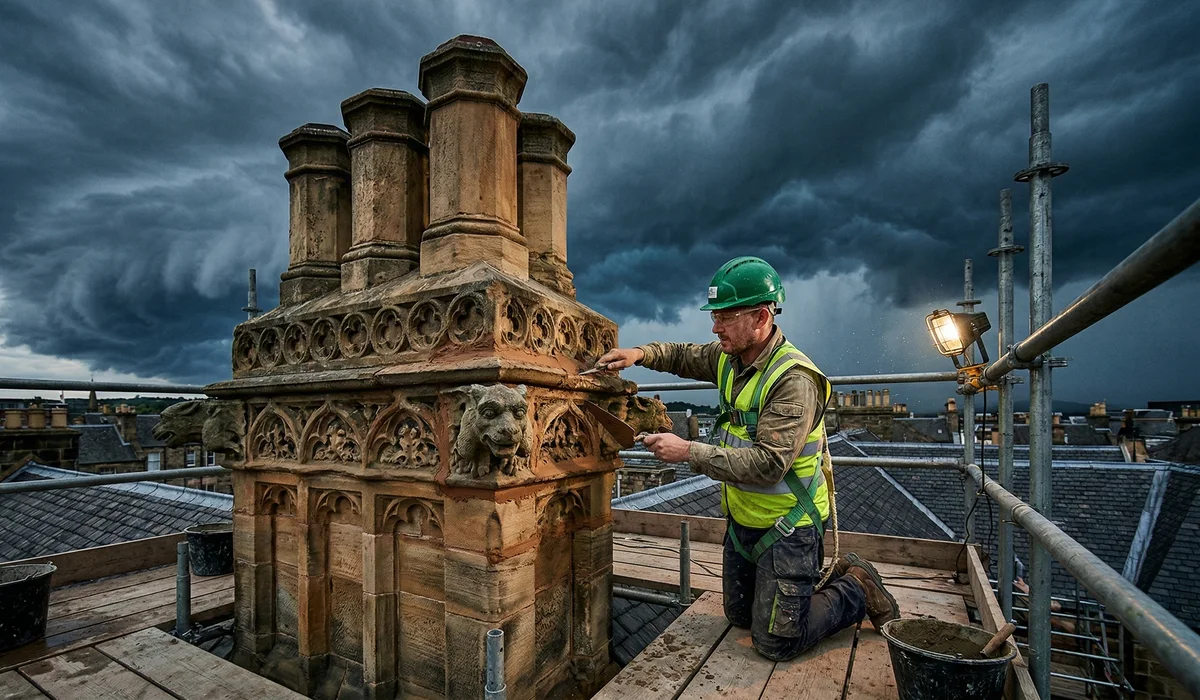
The short version
- Water, failed mortar, cracked crowns, missing caps, and movement are masonry problems that need inspection before repair scope is chosen.
- Repair sequence matters: stop water entry, confirm structural condition, match mortar to the brick, then decide whether sealing, tuckpointing, repair, or rebuild is appropriate.
Source check this article is cross-checked against IRC masonry chimney provisions, NPS repointing guidance, ASTM C270 mortar specification, and GLISA climate resources.
A cracked chimney crown is the most common single point of failure on masonry chimneys across Chicagoland. The crown is the concrete or mortar slab at the top of the chimney structure, and its job is to shed water away from the masonry rather than letting it pool and infiltrate. When the crown fails, water enters the top of the chimney with every rain and every snowmelt event, initiating freeze-thaw damage in the masonry below.
Crown failure is often invisible from the ground. The cracking happens at the chimney top, above the roofline, and the symptoms - white staining, mortar joint deterioration, interior water staining - appear weeks or months after the first significant water infiltration. By the time a homeowner notices the symptom, the crown has often been failing for one to three winters.
In Lake County, where chimneys go through repeated freeze-thaw cycles each winter (and lakefront properties more), a cracked crown is an active structural threat. The chimney cap and crown post covers both components as a system. This post focuses specifically on what causes the crown to crack, how to assess it, and what repair involves.
What the Crown Does and Why It Fails
The chimney crown sits at the top of the masonry structure and covers the space between the flue liner and the outer edge of the chimney. Best practice calls for the crown to overhang the masonry edge slightly and slope toward the edges so water runs off rather than pooling against the flue or the masonry top. A properly formed crown with the right overhang sheds the vast majority of precipitation clear of the masonry.
Crown failure follows a predictable sequence:
Shrinkage cracking during cure: All concrete and mortar crowns develop micro-cracks as they cure and dry. These hairline cracks are the entry points for the first moisture.
Freeze-thaw expansion: Water in the hairline cracks freezes, expanding as it freezes. The expansion widens the crack. The crack holds more water in the next rain event. Each freeze-thaw cycle advances the process.
Surface spalling: As cracks widen, surface sections of the crown break away. What started as a hairline crack becomes a gap that channels water directly onto the masonry top.
Full crown separation: In advanced cases, sections of the crown separate from the masonry entirely, leaving the chimney top completely exposed.
Crowns fail faster when they were installed with insufficient thickness, without proper reinforcement, or without the correct overhang that puts the drip edge clear of the masonry face. A crown that drains water directly onto the chimney face below the crown edge concentrates moisture at the joint between the crown and the top course of brick, which is exactly where deterioration starts.
Why Lake County’s Climate Accelerates Crown Damage
Lake County winters cycle between freezing and thawing more frequently than they hold a single sustained freeze. Each thaw-and-refreeze event advances the crack damage that began in the crown during the previous wet cycle. Lakefront communities in northern Lake County - Waukegan, North Chicago, Lake Villa - carry additional moisture loading from lake-effect precipitation that compounds the standard inland freeze-thaw exposure. The freeze-thaw chimney damage post covers how this cycle works across masonry components generally.
Reading Crown Damage from the Ground
Most homeowners cannot see the chimney crown directly without getting onto the roof. But ground-level indicators give a reliable picture of crown condition:
Efflorescence on upper courses: White staining concentrated on the top two to four brick courses below the crown indicates water is running down from the crown area. A crown that is channeling water onto the chimney face rather than shedding it clear will show consistent staining directly below the drip line.
Mortar joint deterioration in upper courses: Failed or recessed mortar joints on the top chimney courses are a downstream consequence of water that has been entering at the crown for one or more seasons. The joints closest to the crown show the earliest deterioration.
Spalling brick near the chimney top: Brick faces that have flaked or popped in the upper courses indicate freeze-thaw damage driven by water entering through the crown.
Water in the firebox after rain: Water reaching the firebox interior after a rain event, without any sign of condensation, suggests water is entering from above. Crown failure, missing caps, or flue liner damage are the primary candidates.
A chimney inspection that includes roof-level access confirms crown condition. NFPA 211 is the industry standard commonly used for annual inspection planning on chimneys in active service. The chimney cap and crown first-defense post covers the relationship between cap condition and crown condition.
Round Lake and the Postwar Chimney Profile
Recent tract construction in Round Lake from the 2000s and 2010s uses prefabricated metal flues rather than structural masonry. These systems have manufactured chase covers rather than masonry crowns. Chase cover replacement is the maintenance issue on this stock rather than crown repair. The what is a chimney chase post covers the prefab system in detail.
Repair Options: Sealing vs. Rebuilding
Crown sealant products: For crowns with surface cracking that has not yet opened through the full crown thickness, a flexible elastomeric crown sealant applied to the cleaned surface bridges the cracks and provides a waterproof membrane. This approach works when the underlying concrete is structurally sound and the crown geometry is correct. It is not appropriate for crowns with large open cracks, missing sections, or separation from the masonry. Sealant applied to structurally failed crowns masks the problem temporarily but does not prevent continued water entry through the open gaps.
Full crown rebuild: When the crown has through-cracks, missing sections, separation from the masonry, incorrect geometry, or is too thin to hold structural integrity, rebuilding is the right scope. The repair involves removing the failed crown material, cleaning and preparing the masonry top, setting a form for the new crown, and pouring or hand-forming concrete with proper thickness and the correct overhang. The new crown edge should overhang the masonry face slightly so the drip point is clear of the brick.
On historic masonry, the mortar joints immediately below the crown need to be inspected as part of any crown rebuild. Water that has been entering through the crown for multiple seasons has worked into the top course joints. A crown rebuild without addressing the upper-course joints leaves active water pathways open below the repaired crown.
Grayslake’s Mixed Housing and Crown Condition
For Grayslake homeowners dealing with water staining near a chimney, a systematic inspection that traces the entry point - crown, flashing, mortar joints, or cap - prevents spending repair money on the wrong component.
After the Crown Is Fixed: Protecting the Investment
A rebuilt crown is not the end of chimney maintenance. The crown is one component of a system that includes the cap, the flashing, the mortar joints, and the waterproofing sealant on the masonry face. A sound crown combined with failed mortar joints still produces water damage. The chimney waterproofing post covers sealant application to the masonry body after crown and joint repairs are complete.
NFPA 211 calls for annual inspection. After a crown rebuild, an annual Level I inspection confirms that the new crown is holding, the joints below it are stable, and no new water entry has developed. This is the maintenance cadence that keeps a rebuilt crown from returning to the same failure state in ten years.
Schedule Your Crown Inspection and Repair Estimate
Delta - Chimney Repair and Services has handled chimney crown repair across northern Lake County and the northwest suburbs since 1987. We serve Gurnee, Antioch, Round Lake, and Grayslake, along with the broader Chicagoland service area.
We inspect the crown from roof level, document the findings with photos, and produce a written estimate that distinguishes sealing from rebuilding scope. A written estimate needs an on-site assessment. Call (847) 685-1043 or use the contact form to schedule.
The crown is the first component the rain hits and the last one homeowners think to check. In our work across Lake County, crown failure is the starting point for most of the water damage we repair.
Sources and Standards
- NFPA 211: Standard for Chimneys, Fireplaces, Vents, and Solid Fuel-Burning Appliances National Fire Protection Association Defines the three chimney inspection levels and the annual inspection standard.
- ASTM C270: Standard Specification for Mortar for Unit Masonry ASTM International Mortar types and minimum compressive strengths used in chimney masonry repair.
- Great Lakes Freeze-Thaw Climate Data GLISA, University of Michigan Freeze-thaw cycle data for the Great Lakes region.
- International Residential Code, Chapter 10: Chimneys and Fireplaces International Code Council Residential code for chimney and fireplace construction and clearances.
- International Residential Code, Section R1003: Masonry Chimneys International Code Council Code provisions specific to masonry chimney construction.
- Preservation Brief 2: Repointing Mortar Joints in Historic Masonry Buildings U.S. National Park Service Guidance on matching mortar for historic and soft-brick chimney repair.
Fact-checked against the above sources on 2026-05-21.
Pre-Heating-Season Inspection and Sweep (Aug-Oct)
Chimney work runs on a calendar. This is what matters for a Chicagoland home in the window you are reading this.
- The Annual Chimney Inspection: What It Covers NFPA 211's annual cadence means the inspection belongs before the first fire of the season, not after.
- Why Fall Is the Best Time to Schedule a Chimney Sweep Answers the exact timing question homeowners are searching right now, before appliances go back into daily use.
- Fall Chimney Checklist: Before You Light the First Fire A complete pre-season checklist for everything to confirm before heating season starts.
- Chicagoland Seasonal Chimney Inspection Timing: When to Book Chicagoland-specific timing guidance for when to book, tied to local weather patterns.
- Heating Season Chimney Safety for Chicagoland Confirms the flue is clear and the liner is sound before regular winter use begins.
- Holiday Fireplace Safety: Before You Light the Fire What to check before lighting the fire for holiday gatherings, when the fireplace sees its heaviest seasonal use.
- Carbon Monoxide and Your Chimney Carbon monoxide risk rises with active heating-season use; this covers how a chimney problem creates that risk.
- Chimney Fire: Warning Signs and Prevention Creosote accumulated over active winter use is the direct driver of chimney fire risk.
- Freeze-Thaw Damage: What January Does to Your Chimney Where winter's freeze-thaw cycling shows up as visible masonry damage each spring.
- Post-Winter Chimney Checklist for Chicagoland A structured checklist for what to look at once the freeze-thaw season has passed.
- Spring Chimney Inspection: Reading Winter's Damage The seasonal inspection built specifically around catching winter's damage before it worsens.
- Chimney Waterproofing Before Spring Rains Once freeze-thaw damage is found, waterproofing before spring rains reach it is the next step.
- Why Spring Is the Right Time to Rebuild a Chimney Mortar needs consistently warm temperatures to cure properly, which is why spring opens the rebuild season.
- Summer Is the Best Time for Major Chimney Work The case for why summer, not winter, is when masonry work should actually be scheduled.
- Chimney Masonry Repair: Brick, Mortar, and Crown The comprehensive masonry repair guide for the season when that work can actually be done correctly.
- Tuckpointing a Chimney: When Mortar Joints Fail Tuckpointing mortar needs the same curing conditions as a full rebuild, which is why it's a warm-season job too.
Once the problem is identified, cost is the next question every homeowner has before calling.
Chimney Crown Repair FAQs
01 What is a chimney crown and how does it differ from a chimney cap?
02 What causes a chimney crown to crack?
03 Can a cracked chimney crown be sealed without replacing it?
04 How do I know if my chimney crown is cracked if I cannot see the top of the chimney?
05 What does chimney crown repair or rebuilding involve?
06 Does chimney crown damage affect my homeowners insurance?
More Chimney Crown Repair Guides
Chimney Flashing Problems: How to Tell Which Part Is Leaking
Chimney flashing problems produce distinct stain patterns depending on which component failed. Match what you can see from the ground, attic, or inside the house to the likely cause before you call for repair.
Read article Chimney RepairWhat Changes the Price of Chimney Work in Chicagoland
Why two contractors quoting the same Chicagoland chimney can hand you two different numbers, and what a homeowner should compare line by line before signing.
Read article Chimney RepairHow Weather and Lake Michigan Affect Chimneys
Lake Michigan chimney damage on the North Shore follows predictable patterns. Learn how lakefront climate accelerates mortar failure, crown cracking, and liner deterioration.
Read article Seasonal MaintenanceSummer Is the Best Time for Major Chimney Work
Summer chimney repair lets mortar cure properly, contractors are available, and you beat the fall rush. Here is why summer scheduling pays off.
Read articleHave a Question About Your Chimney?
Documented condition, a plain explanation, and a recommended scope before any work.