

Spring Chimney Inspection: Reading Winter's Damage
A spring chimney inspection reveals what winter's freeze-thaw cycles did to your masonry. Learn what NFPA 211 covers and why March is the right time to look.
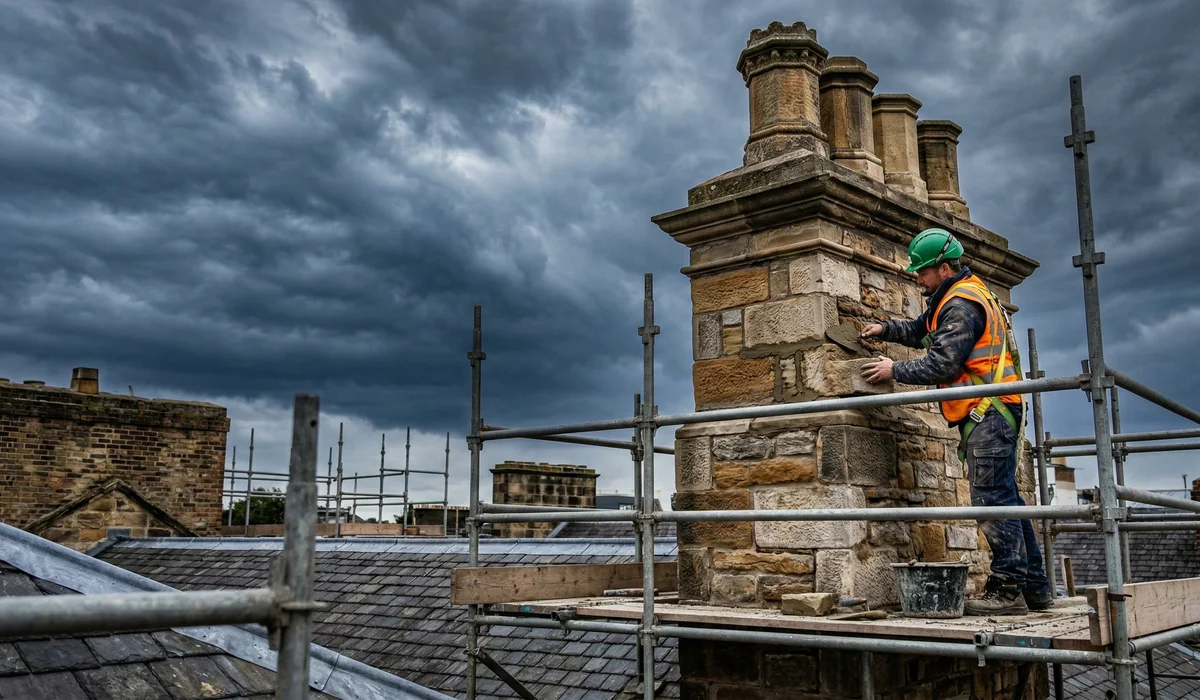
The short version
- Water, failed mortar, cracked crowns, missing caps, and movement are masonry problems that need inspection before repair scope is chosen.
- Repair sequence matters: stop water entry, confirm structural condition, match mortar to the brick, then decide whether sealing, tuckpointing, repair, or rebuild is appropriate.
- Do not use city age, neighborhood age, or generic price ranges as a substitute for roof-level masonry findings.
Source check this article is cross-checked against IRC masonry chimney provisions, NPS repointing guidance, ASTM C270 mortar specification, and GLISA climate resources.
A spring chimney inspection is not the same task as a pre-season inspection in fall. Where a fall inspection asks whether the chimney is ready to burn, a spring inspection asks what the winter actually did to the masonry. These are different questions, and the answers shape different repair priorities. This post explains what a spring chimney inspection covers, why Chicagoland’s climate makes it worth scheduling now rather than waiting until fall, and what homeowners in the western suburbs and southwest Cook County should know about their specific housing stock.
A Chicagoland winter subjects masonry chimneys to dozens of freeze-thaw cycles. Water expands as it freezes. In mortar joints, crown surfaces, and any existing hairline crack, that expansion works on the masonry every time the temperature crosses the freezing point. By March, the cumulative damage is set and visible, if you know where to look. By October, untreated water entry has had six months to spread.
What Does a Spring Chimney Inspection Actually Cover?
A spring chimney inspection follows the same structural framework as any NFPA 211 Level I or Level II inspection. At minimum, a Level I covers all readily accessible portions of the chimney exterior and interior. The spring-specific angle is which failure modes the inspector is actively looking for.
Crown condition is the first check. The crown is the concrete or mortar cap that covers the top of the chimney masonry, leaving only the flue liner opening exposed. In spring, fresh cracks from the winter’s freeze-thaw cycling are often visible on the crown surface as hairline separations or areas where the surface has begun to lift. These cracks are the entry point for spring rainwater.
Mortar joints are the second check. Joints that were marginally sound going into winter often show visible spalling or gaps by March. The surface material has been pushed outward by the ice expansion in the joint and may now be loose or absent.
The cap is checked for corrosion, displacement, or missing hardware. A displaced cap admits birds and rain directly to the flue. Flashing at the chimney-roof junction is checked for lifted edges, cracked sealant, or any separation from the chimney face.
If conditions warrant, a Level II adds video scanning of the flue interior. This is the only way to see liner cracks, displaced tiles, or mortar joint failures inside the flue that are not accessible from the top or the firebox.
Why Freeze-Thaw Damage Accumulates Over Multiple Seasons
One hard winter does not typically destroy a chimney. What happens instead is a progressive process. A hairline crack in the crown lets in the first water. That water freezes and widens the crack. The following summer, the crack is slightly wider. The following winter, it admits more water and the freeze-thaw cycling works on a larger surface area. After three or four winters, what started as a surface crack has become a structural gap that may now extend through the crown thickness.
GLISA research on Great Lakes region freeze-thaw emphasizes that it is not single-event cold snaps but the cumulative cycling that drives masonry deterioration. Chicagoland’s climate, with repeated freeze-thaw cycles each winter, produces this cumulative loading season after season.
The right time to interrupt this cycle is spring, when the damage is fresh and the repairs are still in the category of maintenance rather than reconstruction. A crown sealant applied in March costs far less than a crown rebuild in October.
What the Pre-WWII Housing Stock in This Area Needs
Chimneys built in this era typically used soft common brick and lime-rich mortar. That original mortar has lost binder over more than a century of weather. The spring inspection on one of these chimneys has a specific priority: assess whether the mortar joints have reached the point where repointing is needed, and confirm the correct mortar type for any repair. Repointing historic soft brick with modern Portland-heavy mortar (Type S or Type M) is one of the more destructive mistakes in chimney repair. The mortar must be softer than the brick. ASTM C270 Type N mortar, with a minimum compressive strength of 750 PSI, is the standard match for above-grade residential work on historic masonry.
Brookfield and Riverside
In both communities, the spring inspection establishes what the winter did and what the repair scope needs to be before the summer work window opens.
Reading the Flashing at the Chimney-Roof Junction
Flashing failure is one of the more common spring findings on the pre-WWII housing stock in this area. River Forest’s Wright-era homes, with their wide low-pitched roofs, concentrate water flow toward chimney bases. Prairie School and Foursquare rooflines in Oak Park and La Grange present the same geometry. When flashing sealant fails over winter, spring rains are the first test, and they often produce interior water stains before the homeowner schedules an inspection.
A spring inspection that traces visible interior staining to its entry point prevents the two-contractor situation where the roofer says the flashing is fine and the chimney company says the crown is fine. A systematic inspection traces the path.
For more detail on flashing failure modes, the chimney flashing leak post covers the cause-and-repair sequence. For the full scope of what winter does to masonry, chimney water damage: what winter does to masonry covers the structural progression.
What a Level II Adds and When to Request It
A Level I spring inspection covers accessible surfaces. For the majority of chimneys in continued service with no appliance changes or known damage events, Level I is the starting point.
A Level II adds video scanning of the flue interior plus inspection of accessible attic, crawl space, and basement areas around the chimney. NFPA 211 standard language calls for Level II on a property sale or transfer, after a chimney fire, after weather or seismic events, and when a Level I finding warrants it.
In practice, a spring Level II is worth requesting in two situations: if the chimney went through the heating season with any unusual events (heavy use, a short chimney fire, any burning of wet or unseasoned wood), or if the chimney is over 50 years old and has not had a video scan in recent memory. The flue liner is not visible from outside the chimney; the only way to know its condition is to look inside it.
Our annual chimney inspection post covers what each NFPA 211 level examines in detail.
How Spring Inspection Connects to Summer Repair Timing
The spring inspection is most useful when it leads directly to a repair plan, not just a report. The ideal sequence is: inspect in March or April, document findings, receive a written scope and estimate, schedule work for May through September when the masonry can be worked in stable temperatures and cure properly.
Mortar requires consistent above-freezing temperatures during cure. Summer is when that condition is reliably met. An inspection finding of moderate crown cracking or mortar joint deterioration can be addressed in a single summer visit if the repair scope is clear. The same finding made in October puts the repair into the compressed fall window or, if delayed, into a winter when freeze-thaw will worsen it.
The summer is the best time for major chimney work post explains why masonry repair quality improves when the work is done outside the heating season. The post-winter chimney checklist is a useful complement that walks through the full set of items a homeowner can check from the ground before calling.
Scheduling Your Spring Inspection
Delta - Chimney Repair and Services has handled chimney inspection across Cook County since 1987. We serve La Grange, Brookfield, Riverside, and Oak Park, along with Western Springs, River Forest, and the broader Chicagoland area.
A spring inspection produces a written report of findings and, where repair is needed, a separate written estimate. We do not combine the inspection finding with a pressure to authorize repair on the same visit. The scope is yours to review.
Call (847) 685-1043 or use our contact form to schedule your spring chimney inspection.
Winter is when the damage happens. Spring is when you find it before it becomes something worse.
Sources and Standards
- NFPA 211: Standard for Chimneys, Fireplaces, Vents, and Solid Fuel-Burning Appliances National Fire Protection Association Defines the three chimney inspection levels and the annual inspection standard.
- Great Lakes Freeze-Thaw Climate Data GLISA, University of Michigan Freeze-thaw cycle data for the Great Lakes region.
- ASTM C270: Standard Specification for Mortar for Unit Masonry ASTM International Mortar types and minimum compressive strengths used in chimney masonry repair.
- International Residential Code, Chapter 10: Chimneys and Fireplaces International Code Council Residential code for chimney and fireplace construction and clearances.
- International Residential Code, Section R1003: Masonry Chimneys International Code Council Code provisions specific to masonry chimney construction.
- Preservation Brief 2: Repointing Mortar Joints in Historic Masonry Buildings U.S. National Park Service Guidance on matching mortar for historic and soft-brick chimney repair.
Fact-checked against the above sources on 2026-05-21.
Pre-Heating-Season Inspection and Sweep (Aug-Oct)
Chimney work runs on a calendar. This is what matters for a Chicagoland home in the window you are reading this.
- The Annual Chimney Inspection: What It Covers NFPA 211's annual cadence means the inspection belongs before the first fire of the season, not after.
- Why Fall Is the Best Time to Schedule a Chimney Sweep Answers the exact timing question homeowners are searching right now, before appliances go back into daily use.
- Fall Chimney Checklist: Before You Light the First Fire A complete pre-season checklist for everything to confirm before heating season starts.
- Chicagoland Seasonal Chimney Inspection Timing: When to Book Chicagoland-specific timing guidance for when to book, tied to local weather patterns.
- Heating Season Chimney Safety for Chicagoland Confirms the flue is clear and the liner is sound before regular winter use begins.
- Holiday Fireplace Safety: Before You Light the Fire What to check before lighting the fire for holiday gatherings, when the fireplace sees its heaviest seasonal use.
- Carbon Monoxide and Your Chimney Carbon monoxide risk rises with active heating-season use; this covers how a chimney problem creates that risk.
- Chimney Fire: Warning Signs and Prevention Creosote accumulated over active winter use is the direct driver of chimney fire risk.
- Freeze-Thaw Damage: What January Does to Your Chimney Where winter's freeze-thaw cycling shows up as visible masonry damage each spring.
- Post-Winter Chimney Checklist for Chicagoland A structured checklist for what to look at once the freeze-thaw season has passed.
- Cracked Chimney Crown: Causes and Repair The crown takes the most direct freeze-thaw damage of any component; what a crack there actually means.
- Chimney Waterproofing Before Spring Rains Once freeze-thaw damage is found, waterproofing before spring rains reach it is the next step.
- Why Spring Is the Right Time to Rebuild a Chimney Mortar needs consistently warm temperatures to cure properly, which is why spring opens the rebuild season.
- Summer Is the Best Time for Major Chimney Work The case for why summer, not winter, is when masonry work should actually be scheduled.
- Chimney Masonry Repair: Brick, Mortar, and Crown The comprehensive masonry repair guide for the season when that work can actually be done correctly.
- Tuckpointing a Chimney: When Mortar Joints Fail Tuckpointing mortar needs the same curing conditions as a full rebuild, which is why it's a warm-season job too.
The inspection content answers what's wrong; this answers what it costs to have someone look.
Chimney Inspection FAQs
01 What does a spring chimney inspection look for?
02 How often does NFPA 211 say a chimney should be inspected?
03 Is a Level I or Level II inspection appropriate in spring?
04 Can I wait until fall to have my chimney inspected after winter?
05 What does spring chimney inspection cost in the Chicagoland area?
More Chimney Inspection Guides
Your Chimney Failed Inspection. What Happens Next?
A failed chimney inspection is a scope question, not a verdict. How to read the finding, what has to be fixed before you burn, and what can reasonably wait until spring.
Read article InspectionHow to Read a Chimney Inspection Report
What the levels, components, and terminology on a chimney inspection report actually mean, and the questions worth asking before you approve any work.
Read article Chimney InspectionOrphaned Water Heater: What a High-Efficiency Furnace Does to Your Chimney
When a high-efficiency furnace switches to PVC sidewall venting, the gas water heater is left alone on a flue sized for two appliances. Here is why that matters and what to do about it.
Read article Fireplace ServicesWood Stoves and Fireplace Inserts: What Your Chimney Has to Do
What a wood stove or insert needs from an existing masonry chimney: liner sizing set by the appliance, clearances, the block-off plate, and why a stub connector is not enough.
Read articleSchedule Before the Season Fills
Chicagoland inspection and repair slots fill before the heating-season rush.