
Chase Cap or Chase Cover? The Terms People Mix Up and What You Actually Need
"Chase cap" isn't one part. Here's how it maps to the chase cover, the chimney cap, and the crown, and what a failed cover does to the framing underneath it.
The short version
- "Chase cap" is not an official trade term. People use it to mean the chase cover, the chimney cap, and occasionally the crown, three different parts that fail differently.
- The chase cover is the large flat or pitched metal pan over the entire top of a framed chimney chase. The chimney cap (or rain cap) is the smaller hooded piece over the flue opening itself. The crown is the masonry equivalent of a chase cover, but it belongs to a brick chimney, not a framed one.
- A chase cover corrodes at its seams and around the flue pipe collar first, because that is where the protective coating is thinnest and where water sits longest, not across the flat field of the metal.
- A chase cover is a custom-fabricated part measured to your specific chase; there is no stock size. A chimney cap is sized to a single flue opening and is a simpler replacement.
- By the time a failed cover shows up as a ceiling stain near the fireplace, the wood framing inside the chase has typically been wet for a season or more already.
“Chase cap” shows up constantly in searches for chimney repair around Chicagoland, but it is not a term contractors use to describe one specific part. It is a blend of at least two different components, and sometimes three, and which one a given search actually means depends on what the person is looking at from the ground. Getting matched to the right part before you call for an estimate is what keeps the scope, and the price, accurate.
This post sorts out which term maps to which physical part, how to tell them apart by looking at your own chimney, and what actually goes wrong with a chase cover once you know that is the part in question.
”Chase Cap” Isn’t a Part. It’s Three Parts Wearing One Name
In the field, the terms are chase cover, chimney cap (sometimes called a rain cap), and crown. Nobody drafts a written estimate for a “chase cap” because it doesn’t correspond to a single manufactured item. It is homeowner shorthand, and it gets used loosely by some contractors in conversation too, usually collapsing “chase cover” into “chase cap” because the two words rhyme in structure even though they describe different parts.
Most of the time, someone searching “chase cap repair” is describing a chase cover problem: rust streaks down the siding, standing water on a flat metal deck, a stain appearing on the ceiling near the fireplace. The cover is the part most likely to be visibly failing, which is why it dominates the search. A smaller share of people mean the chimney cap itself, the piece over the flue opening that keeps rain and animals out of the flue. Reading your own chimney correctly before you request an estimate means you get quoted for the right scope on the first visit.
The Four Terms, Side by Side
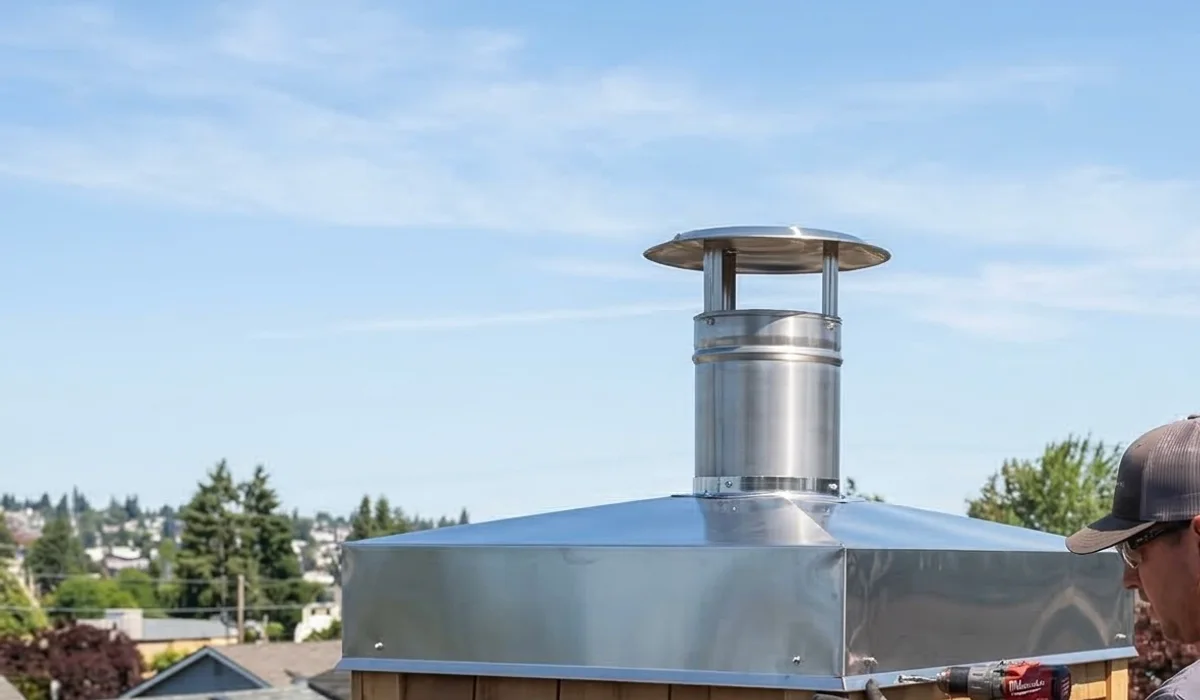
Chase cover is the flat or slightly pitched metal pan that caps the entire top of a framed chimney chase, the same way a lid caps a box. It usually has one or more round openings where prefab metal flue pipes pass through, each sealed with a storm collar.
Chimney cap, also called a rain cap, is the smaller hooded cover that sits directly over a single flue opening, whether that flue is a round pipe coming through a chase cover or a clay tile at the top of a masonry stack. Its job is limited to the flue opening itself, not the surrounding structure.
Crown is the masonry counterpart to a chase cover. It’s the concrete or mortar wash across the top of a brick or stone chimney stack, with the flue tile and cap sitting above it. A crown belongs to a masonry chimney; a chase cover belongs to a framed one. They are never the same part on the same house.
Chase is the framed enclosure itself, not a covering at all. It’s the wood-framed, siding-covered box that houses the prefab metal flue. The chimney chase post covers how that enclosure is built and how it’s different structurally from a masonry chimney.
For the fuller comparison of which chimney system carries which parts, see chase cover vs chimney cap, and for how the crown and cap work together on masonry, see chimney cap and crown.
How to Tell Which One You Have and Which One Failed
Sided, vinyl, or stucco-clad from roofline to top means a framed chase, and the large flat panel up there is the chase cover, not a crown. Solid brick or stone all the way up means a crown and a cap, with no chase cover on that structure at all. The chase cover vs chimney cap post walks through that exterior test in more detail.
Once you know which system you have, look at what’s actually failing:
Rust streaks down the siding, or a stain on the interior ceiling near the fireplace, most often points to the chase cover. It has the largest surface area, the most seams, and the flue collar penetration, all of which are entry points.
Rust or corrosion visible right at the flue opening, with the surrounding cover looking sound, points to the chimney cap. The cap takes direct weather at a smaller, more exposed piece and can fail on its own while the cover underneath is still doing its job.
Standing water pooled on a flat metal deck at the chimney top is a cover problem. A cover that has lost its slope, or was installed without enough pitch to shed water, holds water against the metal far longer than it should.
Whistling, downdraft, or debris in the firebox with the cover looking intact from the ground usually points to a cap fit or mesh issue, not the cover.
If you’re not sure from the ground, that uncertainty is itself the reason for a roof-level look rather than a guess. Misdiagnosing a cap problem as a cover problem, or the reverse, is how homeowners end up requesting the wrong scope.
Why a Chase Cover Rusts at the Seams and the Flue Collar First
Galvanizing protects steel with a zinc coating, and that coating is thinnest exactly where the metal has been cut, folded, or joined: at seams, fastener points, and the collar around the flue pipe penetration. Those same spots hold water longer than the sloped flat field of the cover, and on gas-vented systems, acidic condensate adds to what collects at the collar specifically. That combination, worsened by Chicagoland’s freeze-thaw cycling each winter, is why rust typically shows up at a seam or around the flue pipe well before the flat center of the panel shows any corrosion from the ground.
Why a Chase Cover Has to Be Custom Fabricated
Chases are framed on site to no standard dimension, so a chase cover has to be measured against the actual chase and fabricated to that footprint rather than pulled from stock. A chimney cap is different: flue diameters fall into a smaller number of standard sizes, so a cap can sometimes be matched off the shelf. That’s part of why a cap-only replacement is a simpler, faster job than a full chase cover replacement. The what is a chimney chase post covers what the fabrication and measurement process involves.
Stainless vs Galvanized: Why the Upgrade Holds Up Longer
Stainless steel resists corrosion by a different mechanism than galvanized. Galvanizing relies on a sacrificial zinc coating that depletes over time, fastest at the seams and cut edges described above. Stainless steel’s chromium content forms a thin oxide layer that resists corrosion directly and re-forms if scratched, rather than relying on a coating that eventually runs out, which is why it holds up longer at exactly the spots where a galvanized cover fails first. The chase cover vs chimney cap post covers the cost tradeoff between galvanized, stainless, and copper in more detail.
What a Failed Cover Does to the Framing Before You See a Ceiling Stain
The chase interior is enclosed and hidden, which is exactly why cover failure is dangerous. Once water gets past a corroded seam or a failed flue collar seal, it runs down the inside of the chase walls rather than falling harmlessly to the ground, reaching the wood sheathing and framing members inside the enclosure and any insulation packed around the flue pipe.
Wood framing absorbs that moisture gradually. A closed cavity doesn’t dry out between rain events the way exposed exterior wood does, so repeated exposure compounds rather than resetting. A ceiling stain near the fireplace, when it finally appears, is water that has traveled from the chase top, down the framing, and through enough material to reach a visible interior surface. That path takes time, which is why a cover that “just started leaking” based on when the stain appeared is rarely an accurate read of when the water entry actually began.
What Chase Cover and Cap Replacement Involves
Once an on-site inspection confirms which part failed, the scope splits in two directions. A cover replacement means measuring the chase top, fabricating a new cover to that footprint, and checking the framing beneath it for existing water damage before the new cover goes on and the cap is reinstalled or replaced alongside it; the what is a chimney chase post walks through that process step by step. If the cover itself is sound and the problem is limited to the cap, that’s a narrower job: measuring the flue opening and fitting a correctly sized replacement cap, without the fabrication and framing check a full cover replacement requires. The chimney cap replacement post covers what happens when a cap alone is missing or failed.
Either way, the right scope depends on what’s actually failing, which is why a written estimate follows an on-site look rather than a phone-quoted price. Delta handles both parts of this: chase cover replacement for the full framed enclosure, and chimney cap repair when the flue-opening cap is the actual problem.
Schedule Your Chase Cover or Chimney Cap Inspection
If you searched “chase cap” and aren’t sure yet whether that means the cover, the cap, or both, an on-site look settles it before any repair scope gets written. Rust at a seam or the flue collar, standing water on a flat panel, or a fresh ceiling stain near the fireplace are all reasons to get the chase top inspected before another Chicagoland winter of freeze-thaw cycling works on whatever is already compromised.
Delta - Chimney Repair and Services handles chase cover and chimney cap work across the North Shore and the northwest suburbs. We serve Mount Prospect, Arlington Heights, Schaumburg, Buffalo Grove, and the surrounding communities.
Call (847) 685-1043 or visit our contact page to schedule an inspection and a written estimate.
The part people call a chase cap is usually the chase cover, and the chase cover corrodes at its seams and the flue collar long before the flat panel shows any rust at all.
Sources and Standards
- NFPA 211: Standard for Chimneys, Fireplaces, Vents, and Solid Fuel-Burning Appliances National Fire Protection Association Defines the three chimney inspection levels and the annual inspection standard.
- International Residential Code, Chapter 10: Chimneys and Fireplaces International Code Council Residential code for chimney and fireplace construction and clearances.
- Great Lakes Freeze-Thaw Climate Data GLISA, University of Michigan Freeze-thaw cycle data for the Great Lakes region.
- NFPA 54: National Fuel Gas Code National Fire Protection Association Governs venting for gas appliances and gas fireplaces.
Fact-checked against the above sources on 2026-08-21.
Pre-Heating-Season Inspection and Sweep (Aug-Oct)
Chimney work runs on a calendar. This is what matters for a Chicagoland home in the window you are reading this.
- The Annual Chimney Inspection: What It Covers NFPA 211's annual cadence means the inspection belongs before the first fire of the season, not after.
- Why Fall Is the Best Time to Schedule a Chimney Sweep Answers the exact timing question homeowners are searching right now, before appliances go back into daily use.
- Fall Chimney Checklist: Before You Light the First Fire A complete pre-season checklist for everything to confirm before heating season starts.
- Chicagoland Seasonal Chimney Inspection Timing: When to Book Chicagoland-specific timing guidance for when to book, tied to local weather patterns.
- Heating Season Chimney Safety for Chicagoland Confirms the flue is clear and the liner is sound before regular winter use begins.
- Holiday Fireplace Safety: Before You Light the Fire What to check before lighting the fire for holiday gatherings, when the fireplace sees its heaviest seasonal use.
- Carbon Monoxide and Your Chimney Carbon monoxide risk rises with active heating-season use; this covers how a chimney problem creates that risk.
- Chimney Fire: Warning Signs and Prevention Creosote accumulated over active winter use is the direct driver of chimney fire risk.
- Freeze-Thaw Damage: What January Does to Your Chimney Where winter's freeze-thaw cycling shows up as visible masonry damage each spring.
- Post-Winter Chimney Checklist for Chicagoland A structured checklist for what to look at once the freeze-thaw season has passed.
- Spring Chimney Inspection: Reading Winter's Damage The seasonal inspection built specifically around catching winter's damage before it worsens.
- Cracked Chimney Crown: Causes and Repair The crown takes the most direct freeze-thaw damage of any component; what a crack there actually means.
- Why Spring Is the Right Time to Rebuild a Chimney Mortar needs consistently warm temperatures to cure properly, which is why spring opens the rebuild season.
- Summer Is the Best Time for Major Chimney Work The case for why summer, not winter, is when masonry work should actually be scheduled.
- Chimney Masonry Repair: Brick, Mortar, and Crown The comprehensive masonry repair guide for the season when that work can actually be done correctly.
- Tuckpointing a Chimney: When Mortar Joints Fail Tuckpointing mortar needs the same curing conditions as a full rebuild, which is why it's a warm-season job too.
The foundational concept the cap-versus-cover terminology posts both assume the reader already has.
Chase Cover Replacement FAQs
01 Is a chase cap the same thing as a chase cover?
02 Is a chase cap the same thing as a chimney cap?
03 What is the difference between a chase cover and a chimney crown?
04 How do I know if I have a chase cover, a chimney cap, or both?
05 Why does a chase cover rust at the seams first instead of across the flat surface?
06 Can I buy a standard chase cover, or does it have to be custom made?
More Chase Cover Replacement Guides
What Is a Chimney Chase and How Does It Fail?
A chimney chase is the framed enclosure around a prefab metal flue. Learn how chases are built, how they fail, and what repair or replacement involves.
Read article Chimney RepairChase Cover vs Chimney Cap: The Difference
Chase cover vs chimney cap: learn what each component is, which type your chimney has, and what failure looks like on each system.
Read articleHave a Question About Your Chimney?
Documented condition, a plain explanation, and a recommended scope before any work.