

What a Chimney Rebuild Actually Involves: Scope, Sequence, and Decisions
How a chimney rebuild's scope actually gets decided: the tear-down line, the liner call, brick and mortar matching, and what it means for a furnace that shares the flue.
The short version
- A chimney rebuild scope falls into one of three tiers: partial above the roofline, from the shoulder, or full from the foundation, and the deterioration boundary decides which applies, not the calendar.
- The tear-down line is set course by course as work happens; the pre-rebuild camera scan estimates it, but teardown confirms or adjusts it.
- Liner work is usually done at the same time as a rebuild, since the chimney is already open; scheduling it as a separate job later means paying for access twice.
- If the chimney also vents a furnace or water heater, that appliance is out of service for the same window the masonry is open, and that is worth confirming before work starts, not during it.
Source check cross-checked against IRC masonry chimney provisions, ASTM C270 mortar specification, NPS repointing guidance, and GLISA climate resources.
“Chimney rebuild” and “chimney replacement” describe the same category of work, but a homeowner looking at a failing chimney is more likely to search for “rebuild.” This post is not another walkthrough of what a rebuild covers in general; that ground is covered elsewhere on this site. This post covers the layer underneath the general description: how a rebuild’s scope actually gets decided, how a crew determines where teardown stops, what happens to the liner, how brick and mortar get matched on an older chimney, and what a rebuild means for a furnace or water heater that shares the same chimney structure.
None of this replaces an inspection. It is what an inspection and a written estimate are actually deciding.
Three Rebuild Scopes, and Why the Difference Matters
The word rebuild gets used for three different scopes of work, and knowing which one applies to a specific chimney is the first decision an inspection has to answer.
Above the roofline. The most common scope. Masonry is removed from the crown down to a sound course somewhere between the roofline and the underside of the roof deck, then rebuilt back up. This covers the majority of jobs, because the section above the roof takes the heaviest weather exposure and fails first.
From the shoulder. Below the roofline, a masonry chimney narrows from the firebox and smoke chamber into the flue stack. That transition point is sometimes called the shoulder. When deterioration runs past the roofline into this lower section, but the firebox and foundation are still sound, the rebuild starts at the shoulder instead. This scope shows up more often than most homeowners expect once an inspection opens up an attic or wall cavity to look.
From the foundation. The least common and most disruptive scope. A full rebuild from the footing up is reserved for chimneys with a structural or foundation problem, most often documented as settlement or foundation movement, not for masonry deterioration alone. Tearing down a structurally sound chimney to rebuild it from the ground because the top few courses failed is not a reasonable scope, and the repair-versus-replacement decision exists specifically to prevent that kind of over-scoping.
Which of the three applies is not a matter of preference or budget. It is set by where sound masonry stops.
How the Crew Sets the Tear-Down Line
An inspection estimates the deterioration boundary before work starts, usually with a Level II camera scan of the flue plus a visual assessment of the exterior masonry. That estimate sets the scope on the written estimate, but it is not the final word. The tear-down line gets confirmed course by course, as the work happens.
Teardown starts at the top and works down. Each course of brick is removed individually rather than knocked down in sections, and the mortar and brick condition of that course is checked before the crew moves to the next. The line stops where two or three consecutive courses show sound brick and intact mortar bond, not where the first solid-looking brick appears. A single sound course sitting on top of compromised material is not a stopping point.
Sometimes the confirmed line matches the pre-rebuild estimate; sometimes it does not. Camera inspection can document cracked liner tile and the exterior face of the masonry, but it cannot always see mortar joints deep inside the wall thickness, particularly on older multi-wythe construction. When teardown reveals damage lower than the camera predicted, the scope adjusts before the crew rebuilds past that point.
The Liner Decision During a Rebuild
The flue liner and the surrounding masonry are inspected together, but what happens to the liner is not automatic. Three outcomes are possible.
If the liner is sound, whether clay tile or an existing metal system, it typically stays in place while the masonry around it is rebuilt. There is no reason to replace a functioning liner just because the chimney is open.
If the liner is borderline or shows isolated damage, relining is usually folded into the rebuild scope rather than scheduled as a follow-up job. The reasoning is straightforward: the scaffolding is already up, the masonry is already open, and the access cost of a rebuild has already been paid. Returning later to reline a chimney that was rebuilt around a marginal liner means paying for that access a second time.
If the liner has failed outright, cracked tiles, displaced sections, or a liner that no longer matches the connected appliance, replacement becomes part of the rebuild scope by default. The choice between clay tile, stainless steel, and cast-in-place systems depends on flue geometry and the appliances connected to it; liner types covers those tradeoffs.
Matching Brick and Mortar on an Older Chicago Chimney
Rebuilding a section of an older Chicago-area chimney is not a matter of buying brick that looks similar and mortar that looks the right shade of gray. Two properties matter more than color: brick hardness and mortar strength, and the two have to be compatible with each other.
Brick manufactured before roughly the 1920s tends to be softer than modern brick. Pairing that soft brick with a hard, high-strength modern mortar creates a mismatch: the rigid joint does not give, so the brick absorbs the stress of thermal expansion and freeze-thaw cycling instead, and over repeated winters that mismatch shows up as spalling, the brick face fracturing and separating.
ASTM C270 sets mortar type by compressive strength. Type N, around 750 PSI minimum, is standard for above-grade residential masonry and most rebuild work on brick from the mid-20th century forward. Type O, around 350 PSI, suits soft pre-1920 brick, consistent with National Park Service guidance on repointing historic masonry.
This matters for both the new brick and the mortar bedding it: brick and mortar should be specified together, not treated as separate line items where mortar is an afterthought once the brick order is placed. Tuckpointing on sections not being rebuilt should use the same compatible mortar, so the finished chimney does not age on two different timelines.
Scaffolding and Site Protection
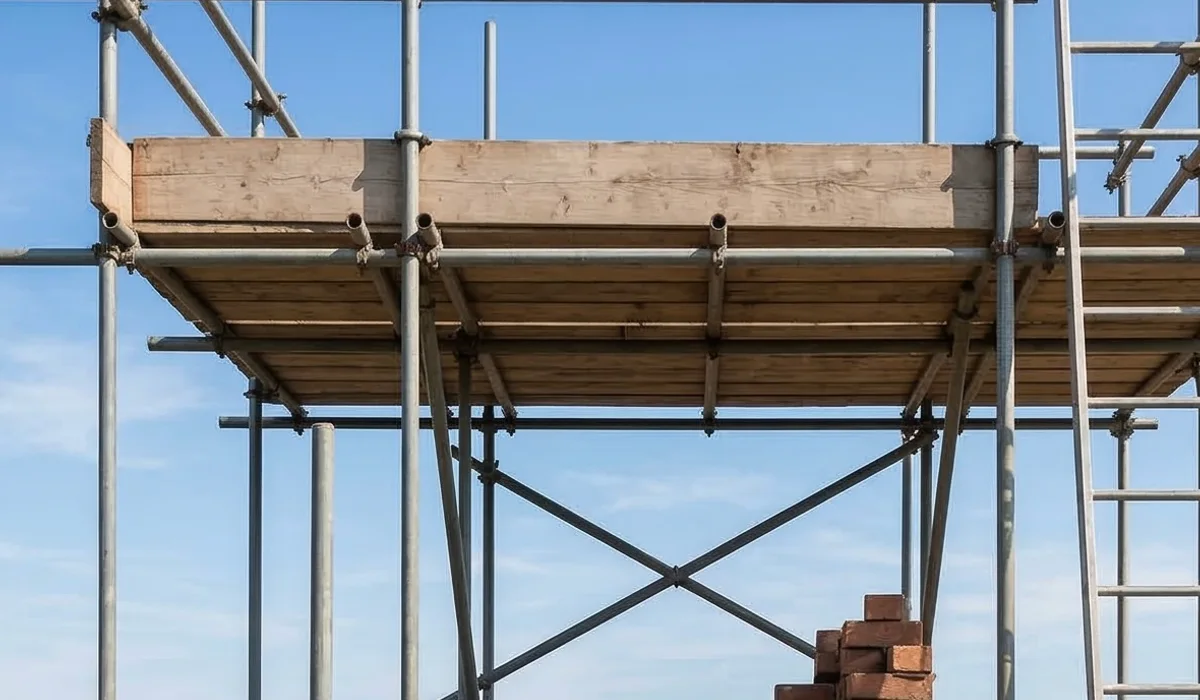
An above-roofline rebuild, and certainly a from-the-shoulder or full rebuild, needs scaffolding that reaches the working height safely and gives the crew a stable platform for removing and relaying masonry by hand. Working from a ladder is not a safe substitute.
Site protection matters as much as access. Brick and mortar debris coming down from roof height needs to be contained, not dropped into landscaping, a driveway, or onto a neighboring property. Ground-level staging for new brick, mortar mixing, and debris collection needs to be set up before teardown starts. Roof surfaces near the work area, particularly older roofing, need protection from foot traffic and falling debris.
Most of this does not show up as a line item, but it is part of what a scaffolding and access charge covers.
What the Roof Needs When the Masonry Comes Back Together
A chimney rebuild does not end at the last course of brick. The chimney-to-roof junction, where flashing ties the masonry into the surrounding roof system, is almost always disturbed by teardown, even on an above-roofline rebuild starting just a few courses up.
Flashing that was already failing before the rebuild should be replaced, not reused. Flashing that was sound but had to be lifted or partially removed for access should be reinstalled and integrated with the new masonry, not just tucked back into place. A rebuild that treats flashing as an afterthought risks new, sound masonry sitting on top of the same water entry point that contributed to the original failure.
If shingles near the chimney base were disturbed during scaffolding setup or teardown, that section needs to be assessed and, if necessary, repaired as part of closing out the job. Ask directly when comparing estimates whether the rebuild scope includes re-flashing and any roofing repair at the base, or whether that falls to a separate roofer afterward.
Permits and the Inspection Sign-Off
A chimney rebuild, at any of the three scopes above, is structural work and requires a permit in virtually every Chicagoland municipality. Documentation and inspection scheduling vary by municipality; how chimney permits generally work across the region covers the landscape in more detail.
What the permit inspection checks is consistent regardless of municipality: the rebuilt chimney’s height above the roof penetration, required clearances from combustible materials, and a liner specification appropriate for the connected appliance, evaluated against ICC IRC Chapter 10, specifically Section R1003 for masonry chimneys. The inspection has to pass before the permit closes.
Unpermitted structural chimney work can complicate a home sale, an insurance claim after a future incident, or a later repair that depends on knowing what was actually done.
How Long the Chimney Is Out of Service
For the duration of a rebuild, the flue involved is out of service. On a single-flue chimney serving only a fireplace, that mostly affects when you can use the fireplace again. On a multi-flue chimney, where a furnace, boiler, or water heater vents through a separate flue inside the same masonry structure, the rebuild can affect an appliance the household depends on daily, not just the fireplace.
If the rebuild scope reaches the section of masonry containing that second flue, whether because the deterioration boundary runs that low or because the flues share a wythe wall being rebuilt, the appliance connected to it cannot be safely operated until the work is complete and inspected. Confirm this directly at the estimate stage: which flues does the rebuild scope affect, and for how long. A homeowner who assumes only the fireplace flue is involved can be surprised mid-project to learn the furnace or water heater is affected too.
Do not restart a furnace or water heater on a flue that was part of a rebuild, or that runs through a section of masonry disturbed by the work, until a chimney professional confirms the flue is complete and drafting correctly. A flue that looks finished from the outside is not the same as a flue confirmed safe to vent combustion gases. If you notice any carbon monoxide symptoms, a persistent odor, or unusual appliance behavior after chimney work, leave the building, call 911 or your gas utility, and have the system inspected before using it again.
The out-of-service window also depends on how long the mortar needs to cure before the chimney can handle heat and thermal cycling again. Mortar cures more reliably in warm, stable temperatures; the spring rebuild timing post and the summer scheduling post cover why those windows are the more predictable choice for cure time before full-time use.
Schedule Your Chimney Rebuild Assessment
Every rebuild starts with an inspection that documents the deterioration boundary, the liner condition, and any appliance flues the work will affect. Getting that assessment early gives you the clearest picture of scope, sequence, and timeline before work begins.
Delta - Chimney Repair and Services handles chimney rebuild and replacement and masonry tuckpointing across Lake County and the broader Chicagoland area. We serve Libertyville, Gurnee, Waukegan, and the surrounding communities.
Call (847) 685-1043 or visit our contact page to schedule an inspection and a written estimate.
The tear-down line is not a guess made from the ground. It is confirmed course by course, and the rebuild scope follows wherever that line actually ends up.
Sources and Standards
- NFPA 211: Standard for Chimneys, Fireplaces, Vents, and Solid Fuel-Burning Appliances National Fire Protection Association Defines the three chimney inspection levels and the annual inspection standard.
- International Residential Code, Chapter 10: Chimneys and Fireplaces International Code Council Residential code for chimney and fireplace construction and clearances.
- International Residential Code, Section R1003: Masonry Chimneys International Code Council Code provisions specific to masonry chimney construction.
- ASTM C270: Standard Specification for Mortar for Unit Masonry ASTM International Mortar types and minimum compressive strengths used in chimney masonry repair.
- Preservation Brief 2: Repointing Mortar Joints in Historic Masonry Buildings U.S. National Park Service Guidance on matching mortar for historic and soft-brick chimney repair.
- Great Lakes Freeze-Thaw Climate Data GLISA, University of Michigan Freeze-thaw cycle data for the Great Lakes region.
- Carbon Monoxide Poisoning Basics Centers for Disease Control and Prevention Public health guidance on CO risks, symptoms, detectors, and prevention.
Fact-checked against the above sources on 2026-08-21.
Pre-Heating-Season Inspection and Sweep (Aug-Oct)
Chimney work runs on a calendar. This is what matters for a Chicagoland home in the window you are reading this.
- The Annual Chimney Inspection: What It Covers NFPA 211's annual cadence means the inspection belongs before the first fire of the season, not after.
- Why Fall Is the Best Time to Schedule a Chimney Sweep Answers the exact timing question homeowners are searching right now, before appliances go back into daily use.
- Fall Chimney Checklist: Before You Light the First Fire A complete pre-season checklist for everything to confirm before heating season starts.
- Chicagoland Seasonal Chimney Inspection Timing: When to Book Chicagoland-specific timing guidance for when to book, tied to local weather patterns.
- Heating Season Chimney Safety for Chicagoland Confirms the flue is clear and the liner is sound before regular winter use begins.
- Holiday Fireplace Safety: Before You Light the Fire What to check before lighting the fire for holiday gatherings, when the fireplace sees its heaviest seasonal use.
- Carbon Monoxide and Your Chimney Carbon monoxide risk rises with active heating-season use; this covers how a chimney problem creates that risk.
- Chimney Fire: Warning Signs and Prevention Creosote accumulated over active winter use is the direct driver of chimney fire risk.
- Freeze-Thaw Damage: What January Does to Your Chimney Where winter's freeze-thaw cycling shows up as visible masonry damage each spring.
- Post-Winter Chimney Checklist for Chicagoland A structured checklist for what to look at once the freeze-thaw season has passed.
- Spring Chimney Inspection: Reading Winter's Damage The seasonal inspection built specifically around catching winter's damage before it worsens.
- Cracked Chimney Crown: Causes and Repair The crown takes the most direct freeze-thaw damage of any component; what a crack there actually means.
- Why Spring Is the Right Time to Rebuild a Chimney Mortar needs consistently warm temperatures to cure properly, which is why spring opens the rebuild season.
- Summer Is the Best Time for Major Chimney Work The case for why summer, not winter, is when masonry work should actually be scheduled.
- Chimney Masonry Repair: Brick, Mortar, and Crown The comprehensive masonry repair guide for the season when that work can actually be done correctly.
- Tuckpointing a Chimney: When Mortar Joints Fail Tuckpointing mortar needs the same curing conditions as a full rebuild, which is why it's a warm-season job too.
The natural next question after any replacement-adjacent post is how that price compares to just repairing.
Chimney Replacement FAQs
01 What is the difference between a partial and a full chimney rebuild?
02 How does a crew decide where to stop tearing down?
03 Does the liner automatically get replaced during a chimney rebuild?
04 What happens to a furnace or water heater that vents through the same chimney during a rebuild?
05 Does a chimney rebuild require a permit?
06 Can the original brick be reused in a chimney rebuild?
More Chimney Replacement Guides
Removing a Chimney: When It Makes Sense and What the Job Involves
Chimney removal makes sense when nothing vents through the flue anymore or repair no longer holds the structure. What the job involves, from re-venting to permits.
Read article Homeowner AdviceChimney Rebuild vs Repair: Cost and Lifespan
Chimney rebuild vs repair: what determines the right choice, how costs compare qualitatively, and what lifespan to expect from each approach.
Read article Seasonal MaintenanceWhy Spring Is the Right Time to Rebuild a Chimney
Spring chimney rebuilds get full cure time before the heating season. Learn what a chimney rebuild involves, when it is required, and why the May-to-September window matters.
Read article Chimney SafetyIs It Safe to Use My Fireplace? A Homeowner's Guide
Is my fireplace safe to use? Here is how to check before you light it - and which warning signs mean you leave the house immediately rather than call a contractor.
Read articleHave a Question About Your Chimney?
Documented condition, a plain explanation, and a recommended scope before any work.